Best Countertop Water Filters 2027: Top 5 Picks Compared
The best countertop water filter for your kitchen depends less on flashy claims and more on your goal (taste vs deeper purification), daily volume, counter space, and how much upkeep you’ll actually do.
In this SelectRanker roundup, we compare countertop RO systems, high-capacity carbon filtration, and dispenser-style options. That way, you can match the right style to your routine instead of guessing from marketing terms.
Use this as a practical countertop water filter comparison: who each pick fits, what to verify before ordering, and the tradeoffs that tend to show up after the first week of ownership.
Top 3 Countertop Water Filters
Compare the first three reviewed products at a glance.
Disclosure: As an Amazon Associate, SelectRanker may earn from qualifying purchases. We may also earn from other affiliate links. This does not change what we recommend or how we compare products.
#1

Bluevua RO100ROPOT Countertop Reverse Osmosis Water Filter System
Editor's Pick
Our top-three picks Rating
Best for
Most households wanting countertop RO purification without permanent install
Key feature
Countertop reverse osmosis format for deep filtration with a simple daily workflow
#2

AquaTru Glass Carafe | Countertop Reverse Osmosis Water Filter Countertop RO System Water Purifier | 4 Stage Reverse Osmosis Filtration | Removes 84 Contaminants Like PFOA + PFOS, Lead, Microplastics
Strong Choice
Our top-three picks Rating
Best for
Maximum purification with a glass-carafe serving style
Key feature
RO purification paired with a glass carafe to reduce plastic contact at the point of use
#3
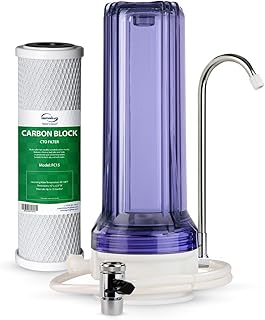
iSpring CKC1C Chlorine Removal Countertop Water Filter System, 10000 Gal
Value Pick
Our top-three picks Rating
Best for
Value-focused buyers prioritizing chlorine/taste improvement and long filter life
Key feature
High-capacity countertop carbon filtration approach aimed at chlorine reduction
This page compares 5 product options, focused on real buying decisions:
- Use-case and fit, including who the product is for, where it will be used, size or fit, portability where relevant, and expected frequency of use
- Performance and compatibility, including the category-specific specifications, dimensions, capacity, connectivity or power needs, included accessories, and setup that affect real use
- Ownership risk, including maintenance, recurring costs, replacement parts, subscriptions where relevant, warranty/support, returns, and long-term value
SelectRanker connects each comparison to the most relevant category hub, related product comparisons, and practical buying guides. Use those links to check the wider context before ordering.
Best Countertop Water Filters 2027: Top 5 Picks Compared
| Image | Product | Best for | Key feature | View on Amazon |
|---|---|---|---|---|
| Bluevua RO100ROPOT Countertop Reverse Osmosis Water Filter SystemBluevua RO100ROPOT Countertop Reverse Osmosis Water Filter System | Most households wanting countertop RO purification without permanent install | Countertop reverse osmosis format for deep filtration with a simple daily workflow | View on Amazon |
| AquaTru Glass Carafe | Countertop Reverse Osmosis Water Filter Countertop RO System Water Purifier | 4 Stage Reverse Osmosis Filtration | Removes 84 Contaminants Like PFOA + PFOS, Lead, MicroplasticsAquaTru Glass Carafe | Countertop Reverse Osmosis Water Filter Countertop RO System Water Purifier | 4 Stage Reverse Osmosis Filtration | Removes 84 Contaminants Like PFOA + PFOS, Lead, Microplastics | Maximum purification with a glass-carafe serving style | RO purification paired with a glass carafe to reduce plastic contact at the point of use | View on Amazon |
| iSpring CKC1C Chlorine Removal Countertop Water Filter System, 10000 GaliSpring CKC1C Chlorine Removal Countertop Water Filter System, 10000 Gal | Value-focused buyers prioritizing chlorine/taste improvement and long filter life | High-capacity countertop carbon filtration approach aimed at chlorine reduction | View on Amazon |
 | PUR 30-Cup Countertop Water Filter Dispenser for Fridge, White/BluePUR 30-Cup Countertop Water Filter Dispenser for Fridge, White/Blue | Families wanting a large, shareable dispenser for fridge/counter | Dispenser-style capacity that’s easy for multiple people to use throughout the day | View on Amazon |
 | PHILIPS Countertop RO Water Filter, Instant Hot and Cold DispenserPHILIPS Countertop RO Water Filter, Instant Hot and Cold Dispenser | Premium convenience: instant hot & cold purified water on demand | All-in-one countertop dispenser workflow (RO + temperature dispensing) for speed and convenience | View on Amazon |
1) Bluevua RO100ROPOT Countertop Reverse Osmosis Water Filter System — Most households wanting countertop RO purification without permanent install
Bluevua RO100ROPOT Countertop Reverse Osmosis Water Filter System
Best for: Most households wanting countertop RO purification without permanent install
Key feature: Countertop reverse osmosis format for deep filtration with a simple daily workflow
Watch for: confirm the footprint, where it will live on your counter, how you’ll fill the tank, filter replacement schedule/cost, and whether the daily “fill and dispense” routine fits your household.
🧐 Quick verdict: A strong baseline countertop RO pick for most buyers—deep purification without committing to under-sink installation.
| Pros ✅ | Cons ⚠️ |
|---|---|
| ✅ Strong all-around option if you want RO-style purification in a countertop format | ⚠️ Counter space and tank-refill routine matter—measure and imagine daily use |
| ✅ Good “reference point” for comparing other countertop RO systems and non-RO filters | ⚠️ Replacement filters add ongoing cost; verify availability and intervals |
| ✅ Fits buyers who want fewer plumbing changes than under-sink RO | ⚠️ You still need somewhere to place it and a convenient way to fill/dispense |
Why it’s a top pick: In countertop water filter reviews, the biggest split is RO vs non-RO. This option works as a smart default because it targets deeper purification than basic carbon pitchers/dispensers, while keeping setup simpler than a full under-sink system.
Decision bullets
- Use-case check: choose RO if you’re trying to reduce a wider range of contaminants—not just improve taste/odor.
- Space check: measure the counter footprint and height clearance where you’ll place it (especially under cabinets).
- Ownership check: verify filter set cost/availability, replacement cadence, and how you’ll handle the fill/dispense routine day to day.
SelectRanker tip: If you’re deciding between countertop RO and under-sink RO, compare what you gain in convenience against what you give up in permanent plumbing and higher output. See: Best Reverse Osmosis Systems 2027 and Reverse Osmosis Vs Countertop Water Filter.
2) AquaTru Glass Carafe | Countertop Reverse Osmosis Water Filter Countertop RO System Water Purifier | 4 Stage Reverse Osmosis Filtration | Removes 84 Contaminants Like PFOA + PFOS, Lead, Microplastics — Maximum purification with a glass-carafe serving style
AquaTru Glass Carafe
Best for: Maximum purification with a glass-carafe serving style
Key feature: RO purification paired with a glass carafe to reduce plastic contact at the point of use
Watch for: confirm the carafe size fits your fridge shelf (if you chill water), how quickly your household goes through a batch, and the ongoing cost/availability of the replacement filters.
🧐 Quick verdict: A strong countertop RO choice for buyers who want “purified water you pour” with a glass-carafe workflow.
| Pros ✅ | Cons ⚠️ |
|---|---|
| ✅ RO-style purification for buyers prioritizing deep filtration over basic taste improvement | ⚠️ Carafe/batch workflow isn’t for everyone—think about peak times (mornings, cooking) |
| ✅ Glass carafe can be appealing if you prefer serving/storage in glass | ⚠️ Replacement filters are part of the long-term cost—verify intervals and pricing |
| ✅ Good fit for “kitchen-ready” serving rather than faucet plumbing projects | ⚠️ Counter footprint + carafe storage space still need planning |
Why it’s a top pick: If your goal is maximum purification in a countertop system, RO is usually the direction to look. This pick makes sense for buyers who also care about how water is stored and served, especially if a glass carafe fits your kitchen habits.
Decision bullets
- Use-case check: ideal when you want RO-level purification but don’t want an under-sink install.
- Workflow check: confirm you’re happy with a carafe/batch routine vs instant dispensing.
- Ownership check: verify filter costs, replacement schedule, and how easy it is to reorder the correct filter set.
SelectRanker tip: When you compare RO to non-RO options, decide first whether you’re solving a “taste/odor” problem or a “deeper purification” problem. That one choice narrows the market quickly. See: Reverse Osmosis Vs Countertop Water Filter.
3) iSpring CKC1C Chlorine Removal Countertop Water Filter System, 10000 Gal — Value-focused buyers prioritizing chlorine/taste improvement and long filter life
iSpring CKC1C Chlorine Removal Countertop Water Filter System
Best for: Value-focused buyers prioritizing chlorine/taste improvement and long filter life
Key feature: High-capacity countertop carbon filtration approach aimed at chlorine reduction
Watch for: this style is typically about taste/odor (like chlorine) rather than RO-level purification—verify the filter’s claimed reductions match what you’re trying to solve.
🧐 Quick verdict: Best value-style countertop filtration when your priority is improving taste and reducing chlorine with less frequent cartridge changes.
| Pros ✅ | Cons ⚠️ |
|---|---|
| ✅ Strong pick when you want a straightforward countertop filter (non-RO) with long-life focus | ⚠️ Not the same job as RO—don’t expect the same contaminant reduction scope |
| ✅ Can lower “cost per gallon” vs smaller cartridges if you go through lots of water | ⚠️ You must match the filter media to your water concerns (taste vs specific contaminants) |
| ✅ Good fit for buyers who want less fuss than multi-stage RO maintenance | ⚠️ Installation/adapter fit at the faucet (if applicable) should be confirmed before buying |
Why it’s a top pick: Not everyone needs RO. When your main complaint is chlorinated taste/smell (or you simply want better-tasting water for daily drinking and cooking), a high-capacity carbon approach can deliver better ownership value with less complexity.
Decision bullets
- Performance check: confirm what the filter is designed to reduce (taste/odor vs broader contaminant reduction).
- Compatibility check: verify how it connects/installs in your kitchen setup and what adapters (if any) are included.
- Ownership check: compare cartridge price and replacement frequency to your household’s weekly water usage.
SelectRanker tip: Before you “upgrade to RO,” confirm your actual need (test results, known local issues, or a specific concern). Otherwise, you may pay more for complexity you won’t use.
4) PUR 30-Cup Countertop Water Filter Dispenser for Fridge, White/Blue — Families wanting a large, shareable dispenser for fridge/counter
PUR 30-Cup Countertop Water Filter Dispenser for Fridge
Best for: Families wanting a large, shareable dispenser for fridge/counter
Key feature: Dispenser-style capacity that’s easy for multiple people to use throughout the day
Watch for: measure fridge shelf height/door clearance if you plan to store it chilled, and verify the correct replacement filter type and ongoing filter cost.
🧐 Quick verdict: Best “family workflow” option when you want lots of filtered water ready to pour—especially if it lives in the fridge.
| Pros ✅ | Cons ⚠️ |
|---|---|
| ✅ Easy for multiple people to use; good for households that go through a lot of water | ⚠️ Size can be a deal-breaker—measure your fridge/counter space first |
| ✅ Dispenser format is convenient for refills, lunches, and quick pours | ⚠️ Not RO—match expectations to the filter type and what it targets |
| ✅ Often a smoother daily routine than small pitchers | ⚠️ Ongoing filter replacements still matter; confirm availability and cost |
Why it’s a top pick: For many kitchens, the best countertop water filter isn’t the most advanced. It’s the one everyone actually uses. A large dispenser cuts down on constant refills, which is often what makes smaller pitchers frustrating in busy households.
Decision bullets
- Fit check: confirm it fits where you’ll store it (counter or fridge), including shelf height and door clearance.
- Routine check: decide who will refill it and how often—bigger capacity usually means heavier refills.
- Filter check: confirm replacement filter model compatibility and what the filter is intended to reduce.
SelectRanker tip: If you stopped using a pitcher in the past, ask what failed. Sometimes the issue isn’t filtration performance—it’s simply “not enough water ready when we need it.” A dispenser often fixes that.
5) PHILIPS Countertop RO Water Filter, Instant Hot and Cold Dispenser — Premium convenience: instant hot & cold purified water on demand
PHILIPS Countertop RO Water Filter
Best for: Premium convenience: instant hot & cold purified water on demand
Key feature: All-in-one countertop dispenser workflow (RO + temperature dispensing) for speed and convenience
Watch for: verify electrical/counter placement needs, daily output expectations for your household, and ongoing filter costs. Convenience-focused dispensers can be great, but they do lock you into their consumables.
🧐 Quick verdict: Best premium countertop RO option when you want fast, appliance-like dispensing (including hot/cold) instead of a carafe or manual pour routine.
| Pros ✅ | Cons ⚠️ |
|---|---|
| ✅ High convenience factor for daily drinking, cooking, and hot beverages | ⚠️ More complex appliance = more to verify (placement, upkeep, consumables) |
| ✅ Great fit for buyers who dislike carafes/pitchers and want “dispense now” workflow | ⚠️ Filter replacements are part of the long-term cost; confirm availability and intervals |
| ✅ Premium option that can change how often you actually use filtered water | ⚠️ Counter space and outlet access can be limiting in smaller kitchens |
Why it’s a top pick: Some buyers don’t need the cheapest filter—they need the easiest one to live with. When you want a countertop upgrade that feels like an appliance (dispense on demand, less “pour and wait”), this is the style that can justify the extra complexity.
Decision bullets
- Routine check: if you use hot water daily (tea, oatmeal, instant meals), instant hot can be the feature that changes your habits.
- Fit check: confirm counter footprint, height clearance, and outlet access where it will live.
- Cost check: compare total ownership cost (filters + any scheduled replacements) versus a simpler RO or dispenser.
SelectRanker tip: Premium convenience wins when it removes friction. If you tried filtered water before and didn’t keep up with it, paying for speed and ease can be the most practical upgrade.
How we evaluate best countertop water filter options
The SelectRanker scoring lens
To recommend countertop filters that make sense in real kitchens, we focus on what changes daily use and long-term ownership:
- Use-case match, including who the product is for, frequency of use, environment, size or fit, and the performance level the buyer actually needs
- Useful specifications, focusing on the category-specific measurements that affect capacity, speed, filtration approach (RO vs carbon), workflow, and everyday convenience
- Compatibility and setup, including dimensions, user or space fit, power needs (for electric dispensers/RO units), included accessories, clearances, and installation requirements
- Usability and ownership, including refill routine, dispensing speed, storage, noise where relevant, cleanup, and how easily the product fits everyday use
- Ownership risk, including maintenance, recurring costs, replacement parts, warranty/support, returns, and long-term value
Before you buy: best countertop water filter
Skip or slow down if these apply
Don’t buy this if…
- You have not decided whether you need RO-style purification or mainly want better taste/odor.
- You have not measured your counter/fridge space or checked height clearance under cabinets.
- You are choosing only by a contaminant claim without considering daily output, refill routine, and filter replacement cost.
- The listing is unclear about replacement filter model numbers, how often they’re replaced, or what’s included in the box.
- You have not checked return terms for a bulky appliance-style system (especially electric RO dispensers).
Good signs you are ready to buy
Buy this if…
- You know your primary goal (taste/odor vs deeper purification) and the routine you’ll realistically follow.
- You’ve verified where it will live (counter or fridge), including clearance and outlet access if needed.
- You checked filter replacement costs/availability and understand the ongoing maintenance.
- You want a short, practical shortlist instead of scrolling through endless countertop water filter reviews.
Buyer’s guide to best countertop water filter
Start with the buyer and real use case
The “right” countertop filter depends on what you’re solving. Some households mainly want better taste and less chlorine smell. Others want RO-style purification without plumbing changes. For families, capacity often matters more than anything.
Performance and features: compare what actually matters
For countertop filtration, the biggest mistake is comparing unlike-for-like. RO systems, carbon dispensers, and faucet-connected filters can all be called “countertop,” but they solve different problems and require different routines.
- Filtration approach: RO (deeper purification) vs carbon (often taste/odor focus) and what that means for your goal.
- Daily workflow: pour-to-fill, carafe/batch, dispenser-style, or faucet-connected—choose what you’ll actually keep up with.
- Capacity and speed: enough water ready when you need it (especially mornings and cooking).
- Ownership cost: replacement filters and scheduled components often matter more than the purchase price.
Compatibility, size, setup, and ecosystem
Before ordering, verify the details that commonly cause returns: counter footprint, height clearance, carafe/fridge fit, power needs for electric systems, and whether the replacement filters are easy to find and clearly identified.
If you’re torn between countertop RO and a more permanent system, use the related SelectRanker guides to understand the tradeoff before you buy.
Build quality, usability, and included accessories
Look for a design that’s easy to refill, easy to dispense from, and easy to clean. With dispenser-style units, pay attention to lid/seal design and how awkward it is to lift when full. For electric RO dispensers, check whether the controls feel intuitive and whether routine maintenance steps are clearly explained.
Maintenance, recurring costs, parts, and ownership
Countertop filters are rarely “set and forget.” Plan for replacement filters, confirm how often they’re changed, and make sure you can buy the exact replacements easily. In practice, a cheaper unit can lose on long-term cost if it burns through cartridges faster.
Warranty, returns, support, and long-term value
Because these products live on your counter and get used daily, returns and support matter. Read the manufacturer guidance, verify warranty/return terms, and prioritize models with clearly documented maintenance steps and replacement parts.
Decision table: buyer concern → what it means → what to check
| Concern | Likely cause | What to check before buying |
|---|---|---|
| The water still doesn’t taste right | The filter type doesn’t target your issue (e.g., chlorine vs other causes) | Match filtration approach to your goal; confirm what the filter is intended to reduce |
| The unit doesn’t fit on the counter or in the fridge | Footprint/height/clearance wasn’t measured | Measure counter space, under-cabinet clearance, and fridge shelf/door clearance |
| It’s annoying to use daily | Refill routine, batch size, or dispensing workflow doesn’t match household habits | Decide between carafe/batch vs dispenser vs faucet-connected; consider peak-demand times |
| Filtered water runs out too fast | Capacity/output doesn’t match household size | Choose capacity based on daily use; consider a larger dispenser or faster workflow |
| Ownership becomes expensive | Replacement filters or scheduled parts cost more than expected | Check replacement filter model numbers, intervals, and availability before buying |
| Results feel inconsistent | Filter is overdue, unit isn’t maintained, or workflow varies | Confirm maintenance steps, indicator guidance (if present), and replacement cadence |
| Comparing products feels impossible | “Countertop filter” includes very different product types | Compare like-for-like: RO vs carbon vs dispenser; prioritize workflow + ongoing costs |
Use the related SelectRanker guides below for deeper category-specific sizing, fit, compatibility, setup, maintenance, and ownership questions.
Common mistakes and quick wins
Quick wins before you buy
- Decide RO vs non-RO first. It’s the fastest way to avoid comparing products that don’t solve the same problem.
- Measure your real placement spot. Countertop filters fail on fit all the time—especially under cabinets and on fridge shelves.
- Price the filters before the machine. The long-term cost is usually replacement filters, not the initial purchase.
- Read the 1–3 star reviews for workflow complaints. Look for repeated issues like slow output, messy refills, hard-to-find filters, or awkward cleaning.
Common mistakes
- Buying an RO system when you mainly wanted better taste (and then disliking the extra upkeep).
- Buying a basic carbon dispenser when you expected RO-style purification.
- Ignoring counter height/clearance and then discovering it doesn’t fit where you planned to use it.
- Skipping the filter replacement math and getting surprised by ongoing costs.
- Choosing based on a single claim instead of the full routine: capacity, speed, refill steps, and storage.
For deeper context, continue with the related SelectRanker guides covering sizing, specifications, compatibility, setup, maintenance, and closely related product comparisons for this topic.
Related SelectRanker guides
- Explore the broader SelectRanker category guide for this product type: Best Products hub
- Browse adjacent home categories for more kitchen and utility picks: Home Appliances hub and Home Utility Appliances hub
- Compare countertop RO to other RO options: Best Reverse Osmosis Systems 2027
- Understand the tradeoffs between filtration types: Reverse Osmosis Vs Countertop Water Filter
FAQs
1) What matters most when choosing the best countertop water filter?
Start with (1) filtration approach (RO vs carbon), then confirm (2) capacity/output for your household, (3) fit on your counter or fridge, and (4) replacement filter cost and availability. Those four factors usually predict satisfaction better than a long feature list.
2) Is countertop RO worth it compared with a standard countertop carbon filter?
Countertop RO can be worth it when you want deeper purification than taste/odor improvement and you’re comfortable with a larger appliance plus ongoing filter replacements. On the other hand, if your main goal is reducing chlorine taste and improving drinkability, a high-capacity carbon countertop filter is often simpler to own.
3) What’s the most important fit check for a countertop water filter?
Measure the exact spot where it will live: footprint on the counter, height under cabinets, and (for dispenser/carafe styles) fridge shelf and door clearance. Many returns happen because a unit “fits on a counter,” but not in the one place you need it.
4) How do I estimate the right capacity for my household?
Think in peak moments, not averages: mornings, dinner prep, refilling bottles, and guests. If you’ve run out of filtered water before, prioritize a larger dispenser or a faster workflow. For solo use or light drinking-water needs, a smaller batch system may be enough.
5) What ongoing costs should I expect with a countertop water filter purchase?
Replacement filters are the main recurring cost. With RO systems and electric dispensers, there may be multiple filters on different schedules. Before you buy, confirm the exact replacement filter model numbers, typical replacement intervals, and whether filters are easy to source from reliable sellers.
6) Is it safe to buy a countertop water filter online?
It can be, as long as the listing clearly states what’s included, which replacement filters you’ll need, and the return policy (especially for bulky or electric units). For higher-priced systems, also verify how warranty support is handled and who provides it (manufacturer vs third-party seller).
7) Do countertop filters require installation?
Many countertop systems are no-plumbing (you fill a tank or carafe), while others connect at the faucet and may require an adapter. Electric dispensers also need counter space plus an outlet. To avoid surprises, confirm which style you’re buying before ordering.
8) What should I double-check before ordering?
Check dimensions/clearance, filtration type (RO vs carbon), daily capacity/output, replacement filter model numbers, what’s included in the box, warranty/returns, and repeated buyer complaints about workflow. In reviews, watch for patterns like slow dispensing, messy refills, hard-to-clean parts, or hard-to-find filters.
Final verdict on best countertop water filter
If you want the safest first choice, start with Pick #1 because it’s a strong all-around countertop RO baseline for fit, workflow, and ownership tradeoffs.
Choose Pick #2 when you want maximum purification with a glass-carafe serving style.
Choose Pick #3 when you mainly want chlorine/taste improvement with strong long-term value and less complexity than RO.
Choose Pick #4 when household capacity and “always ready” fridge/counter dispensing matter most.
Choose Pick #5 when premium convenience—especially instant hot and cold—will change how often you actually use filtered water.
For more context, continue with the related SelectRanker category hub and guides listed above.