Best Level 2 EV Chargers 2027: Top 5 Picks Compared
The best Level 2 EV charger for your home is the one that matches your car’s connector, your electrical setup, and how you actually charge (overnight top-ups, faster turnaround, shared driveway, or occasional use). Many listings look similar, but details like hardwired vs plug-in, usable amperage, cable management, and app reliability decide day-to-day satisfaction.
This SelectRanker roundup focuses on real fit checks and ownership tradeoffs: what to verify before you buy, what each charger is best at, and where people commonly get stuck during setup.
If you’re also sorting out electrical requirements, start here: Level 2 EV Charger Amps And Circuit Requirements Explained.
Top 3 Level 2 EV Chargers
Compare the first three reviewed products at a glance.
Disclosure: As an Amazon Associate, SelectRanker may earn from qualifying purchases. We may also earn from other affiliate links. This does not change what we recommend or how we compare products.
#1
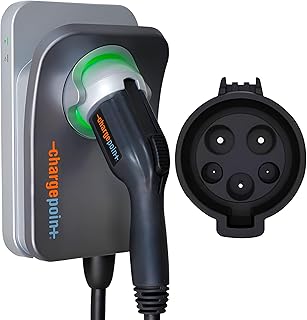
ChargePoint HomeFlex Level 2 EV Fast Charger, J1772, Smart, Hardwired, 50A
Editor's Pick
Our top-three picks Rating
Best for
Most households that want a smart, hardwired setup with room to scale
Key feature
App-based scheduling and energy tracking for simpler overnight charging
#2

ChargePoint HomeFlex Level 2 EV Charger J1772 – NEMA 14-50 Plug
Strong Choice
Our top-three picks Rating
Best for
Homes that want plug-in convenience (NEMA 14-50) and smart features
Key feature
Easier install path when you already have a compatible 240V outlet
#3

Level 2 EV Charger J1772 48A – Hardwired 240V Wall Charging Station
Featured Pick
Our top-three picks Rating
Best for
Drivers who want a high-power hardwired charger for faster turnaround
Key feature
48A-class hardwired design for higher potential charge rates (when your circuit supports it)
This page compares 5 product options, focused on real buying decisions:
- Use-case and fit, including who the product is for, where it will be used, size or fit, portability where relevant, and expected frequency of use
- Performance and compatibility, including the category-specific specifications, dimensions, capacity, connectivity or power needs, included accessories, and setup that affect real use
- Ownership risk, including maintenance, recurring costs, replacement parts, subscriptions where relevant, warranty/support, returns, and long-term value
SelectRanker connects each comparison to the most relevant category hub, related product comparisons, and practical buying guides so you can check the wider context before ordering.
Best Level 2 EV Chargers 2027: Top 5 Picks Compared
| Image | Product | Best for | Key feature | View on Amazon |
|---|---|---|---|---|
| ChargePoint HomeFlex Level 2 EV Fast Charger, J1772, Smart, Hardwired, 50AChargePoint HomeFlex Level 2 EV Fast Charger, J1772, Smart, Hardwired, 50A | Most households that want a smart, hardwired setup with room to scale | App-based scheduling and energy tracking for simpler overnight charging | View on Amazon |
| ChargePoint HomeFlex Level 2 EV Charger J1772 – NEMA 14-50 PlugChargePoint HomeFlex Level 2 EV Charger J1772 – NEMA 14-50 Plug | Homes that want plug-in convenience (NEMA 14-50) and smart features | Easier install path when you already have a compatible 240V outlet | View on Amazon |
| Level 2 EV Charger J1772 48A – Hardwired 240V Wall Charging StationLevel 2 EV Charger J1772 48A – Hardwired 240V Wall Charging Station | Drivers who want a high-power hardwired charger for faster turnaround | 48A-class hardwired design for higher potential charge rates (when your circuit supports it) | View on Amazon |
 | Level 2 EV Charger, 48Amp/11.5KW/240V, UL 2594, ETL & Energy StarLevel 2 EV Charger, 48Amp/11.5KW/240V, UL 2594, ETL & Energy Star | Value-focused buyers who still want recognized safety certifications | Certification-focused pick (UL 2594 / ETL / Energy Star listed in the product title) | View on Amazon |
 | Portable Level 2 EV Charger, 32A, NEMA 14-50, 25 ft, J1772Portable Level 2 EV Charger, 32A, NEMA 14-50, 25 ft, J1772 | Travel, multi-location charging, or renters who need portability | Portable 32A charger format with a long cable for flexible parking positions | View on Amazon |
1) ChargePoint HomeFlex Level 2 EV Fast Charger, J1772, Smart, Hardwired, 50A — Most households that want a smart, hardwired setup with room to scale
If you want one smart, mainstream Level 2 charger that’s easy to live with day after day, this is the most balanced starting point in our Level 2 EV charger comparison.
Best for: Most households that want a smart, hardwired setup with room to scale
Key feature: App-based scheduling and energy tracking for simpler overnight charging
Watch for: confirm your connector type (J1772 vs NACS/Tesla needs an adapter), whether you’re going hardwired, and what amperage your circuit can support for continuous EV charging.
🧐 Quick verdict: The best overall pick when you want smart features, clean installation, and an easy benchmark for comparing every other Level 2 EV charger 2027 option.
| Pros ✅ | Cons ⚠️ |
|---|---|
| ✅ Strong “set it and forget it” choice for nightly home charging | ⚠️ Hardwired install can require an electrician and permits depending on your area |
| ✅ Smart scheduling/energy data helps manage time-of-use rates | ⚠️ Requires Wi‑Fi/app setup to get the most value from smart features |
| ✅ Good baseline for comparing plug-in, portable, and value models | ⚠️ Verify cable reach and mounting location before you commit to install |
Why it’s a top pick: For most buyers, the “best Level 2 EV charger” decision is really about a reliable daily workflow: plug in quickly, charge on a schedule, and avoid surprises with compatibility or installation. With that in mind, this option is a strong all-around fit.
Decision bullets
- Use-case check: ideal for consistent home charging where you want scheduling and visibility into charging sessions.
- Specification check: verify your target amperage and whether your panel/circuit can support it for continuous load (see the circuit guide linked above).
- Ownership check: confirm where it will mount, cable reach to your charge port, and what support/warranty terms apply through the seller and manufacturer.
SelectRanker tip: If you’re unsure whether to go plug-in or hardwired, start by confirming your existing outlet/circuit situation. Next, decide whether you want the flexibility to unplug and move the unit later.
2) ChargePoint HomeFlex Level 2 EV Charger J1772 – NEMA 14-50 Plug — Homes that want plug-in convenience (NEMA 14-50) and smart features
If you want a strong Level 2 EV charger experience without committing to a hardwired install, a plug-in model can be the simplest path. This approach works best when you already have a compatible 240V outlet.
Best for: Homes that want plug-in convenience (NEMA 14-50) and smart features
Key feature: Easier install path when you already have a compatible 240V outlet
Watch for: confirm the outlet type (NEMA 14-50), breaker size, and that the receptacle is in good condition; worn outlets and loose connections are a common source of heat issues.
🧐 Quick verdict: The “most homes” pick when you want smart charging but prefer a plug-in setup you can remove or relocate.
| Pros ✅ | Cons ⚠️ |
|---|---|
| ✅ Plug-in convenience can reduce install complexity | ⚠️ Your outlet, wiring, and breaker still must be correct for continuous EV charging |
| ✅ Good option for garages where the outlet is already placed well | ⚠️ Outlet location can force awkward cable routing if the car parks differently |
| ✅ Easier to take with you if you move homes | ⚠️ If you later want higher output, you may still prefer hardwired |
Why it’s a top pick: Plug-in Level 2 charging is about convenience and flexibility. When the outlet is correct and the circuit is sized properly, this style can deliver the everyday benefits of a smart charger without a permanent install.
Decision bullets
- Use-case check: best if you want to keep installation simple or might move and want to take the charger with you.
- Tradeoff check: plug-in convenience vs the potential benefits of hardwired (cleaner install, often preferred for higher continuous loads).
- Compatibility check: verify NEMA 14-50 outlet, cable reach, and that your EV uses J1772 (or you have the correct adapter).
SelectRanker tip: Even if you’re buying plug-in to avoid major electrical work, confirm the circuit is appropriate. In practice, many “it works” setups are not ideal for long-term daily charging.
3) Level 2 EV Charger J1772 48A – Hardwired 240V Wall Charging Station — Drivers who want a high-power hardwired charger for faster turnaround
If you routinely arrive home low and want more charging done in fewer hours, a higher-power hardwired station can be the right move. Before you commit, make sure your electrical service supports it.
Best for: Drivers who want a high-power hardwired charger for faster turnaround
Key feature: 48A-class hardwired design for higher potential charge rates (when your circuit supports it)
Watch for: “48A” only helps if your breaker, wiring gauge, and panel capacity are sized for continuous EV charging, and your vehicle’s onboard charger can accept that rate.
🧐 Quick verdict: The right pick when you’re building a dedicated, higher-output home charging setup and you’re willing to do the electrical homework.
| Pros ✅ | Cons ⚠️ |
|---|---|
| ✅ Better fit for drivers who need faster home charging windows | ⚠️ Requires correct circuit sizing and typically professional installation |
| ✅ Hardwired format is well-suited to higher continuous loads | ⚠️ Your EV may not draw the full available amperage |
| ✅ Good option for households planning around future EVs | ⚠️ Higher-power setups can increase install cost (panel work, wiring run, permits) |
Why it’s a top pick: In Level 2 EV charger reviews, “fast enough” is personal. If you have a long commute, multiple EVs, or you need same-night turnaround, higher available amperage can matter—provided your home and vehicle can actually use it.
Decision bullets
- Performance check: confirm both sides of the equation—your electrical capacity and your EV’s onboard charger acceptance.
- Compatibility check: review hardwired installation requirements, mounting location, and cable reach to your charge port.
- Workflow check: if multiple drivers share the charger, prioritize easy cable management and predictable scheduling/controls.
SelectRanker tip: If you’re upgrading specifically for speed, verify the continuous-load circuit requirements first. Otherwise, you may pay for “48A” and still run it at a lower setting.
4) Level 2 EV Charger, 48Amp/11.5KW/240V, UL 2594, ETL & Energy Star — Value-focused buyers who still want recognized safety certifications
If your goal is a certified, higher-output style charger without paying extra for a premium brand ecosystem, this pick targets that practical value lane.
Best for: Value-focused buyers who still want recognized safety certifications
Key feature: Certification-focused pick (UL 2594 / ETL / Energy Star listed in the product title)
Watch for: confirm the certification details on the listing/documentation, plus whether it’s hardwired or plug-in for your install plan (and whether any required hardware is included).
🧐 Quick verdict: A strong shortlist option when you want value but don’t want to compromise on clearly stated certification and basic charging capability.
| Pros ✅ | Cons ⚠️ |
|---|---|
| ✅ Good fit for buyers prioritizing certification plus value | ⚠️ Verify exactly what’s included (mounting hardware, holster, cord management) |
| ✅ Targets high-output home charging without paying for brand extras | ⚠️ App experience and long-term software support can vary by brand |
| ✅ Makes sense for straightforward “charge at home” needs | ⚠️ Installation requirements can still drive total cost more than the charger itself |
Why it’s a top pick: “Value” in a Level 2 EV charger 2027 market isn’t just about spending less. Instead, it’s about getting the charging capability you need with fewer red flags around safety documentation, setup, and long-term ownership.
Decision bullets
- Fit check: confirm connector (J1772) and cable length works for your parking position and charge-port location.
- Capacity check: make sure your electrical system can support the charger setting you plan to use continuously.
- Setup check: verify install type (hardwired vs plug-in), required tools/hardware, and whether you’ll need an electrician.
SelectRanker tip: When two chargers look similar on paper, let install simplicity, cable reach, and clear documentation break the tie. Those details reduce ownership headaches.
5) Portable Level 2 EV Charger, 32A, NEMA 14-50, 25 ft, J1772 — Travel, multi-location charging, or renters who need portability
Not everyone wants a wall-mounted station. If you need a charger you can store in the trunk, use at a second property, or rely on in a rental, a portable Level 2 unit is often the practical answer.
Best for: Travel, multi-location charging, or renters who need portability
Key feature: Portable 32A charger format with a long cable for flexible parking positions
Watch for: confirm you’ll have access to the right outlet (NEMA 14-50) where you plan to use it, and plan for safe cable routing so it isn’t pinched by garage doors or driven over.
🧐 Quick verdict: Best portable option when flexibility matters more than a permanent, hardwired “home base” install.
| Pros ✅ | Cons ⚠️ |
|---|---|
| ✅ Easy to move between locations or keep as a backup | ⚠️ Usually less “clean” cable management than a wall-mounted station |
| ✅ Great fit for renters or shared parking situations | ⚠️ You’re limited by whatever outlets are available where you travel |
| ✅ Long cable helps when you can’t park perfectly | ⚠️ Portability can mean more wear-and-tear; inspect plugs/cable regularly |
Why it’s a top pick: Portability is its own category. With a portable charger, you gain the ability to charge in more places with less commitment, but you may give up some “installed” convenience and tidy cable management.
Decision bullets
- Budget check: factor in whether you’ll need an outlet installed at home anyway; “portable” doesn’t always mean “no electrician ever.”
- Use-case check: best for backup charging, travel, or multi-location use—not necessarily the cleanest daily garage setup.
- Risk check: verify plug type, cable length, storage method, and that the unit’s protection features and documentation are clear.
SelectRanker tip: If you’ll use portable charging daily, prioritize outlet quality and cable routing. Those are the weak points in many real-world setups.
How we evaluate best Level 2 EV charger options
The SelectRanker scoring lens
To recommend Level 2 chargers that make sense for real garages and real commutes, we focus on what changes everyday charging and long-term ownership:
- Use-case match, including who the product is for, frequency of use, environment, size or fit, and the performance level the buyer actually needs
- Useful specifications, focusing on the category-specific measurements that affect capacity, speed, image or sound quality, runtime, comfort, fit, range, accuracy, or other real performance
- Compatibility and setup, including dimensions, user or space fit, device ecosystem, connectivity, power or charging needs, accessories, clearances, and installation requirements
- Usability and ownership, including portability, controls, adjustment, ergonomics, storage, noise, cleanup, software where relevant, and how easily the product fits everyday use
- Ownership risk, including maintenance, recurring costs, subscriptions, replacement parts, warranty/support, returns, and long-term value
Before you buy: best Level 2 EV charger
Skip or slow down if these apply
Don’t buy this if…
- You haven’t confirmed your connector type (J1772 vs NACS/Tesla) and whether you need an adapter.
- You don’t know whether you want hardwired vs plug-in (or what your home can support).
- You haven’t checked your panel capacity, breaker size, wire gauge, and continuous-load requirements for EV charging.
- The listing is unclear about what’s included (plug type, mounting bracket, holster, cable management) or how warranty/returns work.
- You’re choosing purely by “amps” without confirming your car and electrical system can use that output safely.
Good signs you are ready to buy
Buy this if…
- You know your connector type and where the charger will mount or be stored.
- You’ve confirmed your electrical plan (existing NEMA 14-50 outlet vs new outlet vs hardwired install).
- You’ve checked cable reach to your vehicle’s charge port in your normal parking position.
- You want a clear shortlist of credible options instead of sorting through hundreds of similar listings.
Buyer’s guide to best Level 2 EV charger
Start with the buyer and real use case
Your “right” charger depends on your routine: overnight charging for a single EV, shared charging for two drivers, faster top-ups between trips, or a portable solution for travel. Because those use cases differ, priorities change too—install type, cable length, durability, app scheduling, and how much output you can realistically use.
Performance and features: compare what actually matters
In a Level 2 EV charger comparison, amps and kW get the headlines, but they aren’t the whole story. Often, your home’s circuit capacity or the car’s onboard charger is the limiting factor—not the charger’s maximum rating.
- Performance: match charger output to what your electrical system and vehicle can support for continuous charging.
- Capacity and size: prioritize cable length and mounting location so you can plug in without stretching or blocking walkways.
- Controls and usability: if you care about off-peak charging, look for reliable scheduling and a straightforward app/interface.
- Portability and setup: plug-in and portable units can be easier to deploy, but you still need the right outlet and safe cable routing.
Compatibility, size, setup, and ecosystem
Before you buy, confirm connector type, install type (hardwired vs plug-in), outlet type (if plug-in), Wi‑Fi needs (if smart), and where the cable will run. In many garages, small layout issues—like the charge port being on the “wrong” side—matter more than an extra 8–16 amps on paper.
If two products solve the same need differently, use the related SelectRanker comparison and buying guides supplied with the page to understand the tradeoff before buying.
Build quality, usability, and included accessories
Look for sturdy cable handling, a secure holster/plug dock, and clear mounting instructions. For smart models, “build quality” also includes app stability and how easily you can set schedules, view charging history, and recover from Wi‑Fi changes.
Maintenance, recurring costs, parts, and ownership
Level 2 chargers don’t have many consumables, but ownership costs show up in other ways: electrician labor, outlet upgrades, replacement holsters/cable supports, and the hassle cost of weak support or confusing warranty processes. To spot common issues, read the negative reviews for patterns around failures, overheating complaints, or app problems.
Warranty, returns, support, and long-term value
EV charging involves continuous electrical load. Follow manufacturer instructions and local electrical requirements, and confirm warranty/return terms before buying—especially for heavy, installed items that are inconvenient to ship back. When you’re unsure, prioritize clearly documented certification and support.
Decision table: buyer concern → what it means → what to check
| Concern | Likely cause | What to check before buying |
|---|---|---|
| The charger isn’t as “fast” as expected | Your EV’s onboard charger or your circuit limits the actual draw | Confirm vehicle acceptance rate, breaker size, continuous-load limits, and the charger’s configurable output |
| The charger doesn’t fit your parking setup | Cable length or mounting location doesn’t reach the charge port comfortably | Measure distance to the charge port in your normal parking position; plan cable routing and holster placement |
| Plug-in setup runs hot or feels unreliable | Worn/low-quality receptacle, loose connection, or undersized wiring | Verify outlet condition and correct installation; consider a high-quality receptacle and professional inspection |
| Smart features are frustrating | Weak Wi‑Fi signal, app issues, or confusing setup | Check Wi‑Fi coverage in the garage/driveway, app requirements, and review patterns about connectivity |
| Installation cost is higher than expected | Long wire run, panel limitations, permits, or hardwired requirements | Get an electrician quote; confirm whether you need a new circuit, panel work, or an outlet install |
| You bought the wrong connector | Mismatch between J1772 and NACS/Tesla needs | Confirm your vehicle inlet type and whether you’re comfortable using an adapter |
| Feature lists feel impossible to compare | Marketing terms and non-equivalent specs | Return to basics: install type, connector, usable amperage, cable reach, certification, warranty, and app reliability |
Use the related SelectRanker guides below for deeper category-specific sizing, fit, compatibility, setup, maintenance, and ownership questions.
Common mistakes and quick wins
Quick wins before you buy
- Confirm your connector first. J1772 works for many EVs; NACS/Tesla may require an adapter—don’t guess.
- Decide hardwired vs plug-in early. This one choice affects install cost, flexibility, and how much output you can practically run.
- Measure cable reach. A charger can be “top rated” and still be annoying if the cable barely reaches your charge port.
- Read the 1–3 star reviews for patterns. Look for repeated mentions of overheating at the plug, app dropouts, failed units, or poor warranty support.
Common mistakes
- Buying based on maximum amps without confirming the circuit and vehicle can use it.
- Assuming any 240V outlet is “good enough” for daily EV charging.
- Ignoring where the charge port is on the vehicle and where the charger will mount.
- Overpaying for smart features you won’t use—or underbuying when you need scheduling for off-peak rates.
- Not checking returns/warranty for an installed product that’s hard to uninstall and ship back.
For deeper context, continue with the related SelectRanker guides covering sizing, specifications, compatibility, setup, maintenance, and closely related product comparisons for this topic.
Related SelectRanker guides
- Explore the broader SelectRanker category guide for this product type: Best Products hub
- Browse more vehicle and garage gear roundups: Automotive hub
- See related power and maintenance picks for your car setup: Car Power Maintenance hub
- Get the electrical basics right before you order: Level 2 EV Charger Amps And Circuit Requirements Explained
FAQs
1) What should buyers prioritize for the best Level 2 EV charger at home?
Start with (1) the right connector (J1772 vs NACS/Tesla), (2) the right install type (hardwired vs plug-in), and (3) usable amperage that matches your circuit and your vehicle. After that, cable reach, safety certification/documentation, warranty/returns, and scheduling (if you use off-peak rates) tend to matter most.
2) Do I need a hardwired charger or a plug-in (NEMA 14-50) model?
Choose plug-in if you already have a properly installed NEMA 14-50 outlet in the right spot and you want flexibility to unplug or move the charger. Go hardwired if you want a cleaner permanent install, may run higher continuous output, or want to reduce reliance on a receptacle that can wear over time.
3) Will a “48A” Level 2 charger always charge my EV faster?
Not always. Your EV can only draw up to what its onboard charger supports, and your home can only supply what the circuit is safely sized for as a continuous load. A 48A-capable unit can still be a smart choice, but verify both your vehicle limit and your circuit capacity before you buy for “speed.”
4) What fit and compatibility checks should I make before buying a Level 2 charger?
Check connector type, install type (hardwired vs plug-in), outlet type (if plug-in), and cable length to your vehicle’s charge port in your normal parking position. If you want smart features, confirm Wi‑Fi signal strength where the charger will live. Also verify what mounting and cable-management hardware is included.
5) Are smart features actually useful for home charging?
Smart features help most when you want scheduled charging for time-of-use electric rates, charging-session history, or notifications. If you always plug in overnight and don’t care about tracking, a simpler unit (or your vehicle’s built-in scheduling) may be enough—assuming the electrical fit and cable reach are right.
6) Is a portable Level 2 EV charger a good primary charger?
It can be, especially for renters or people who charge in multiple locations. The tradeoff is usually less tidy cable management and more dependence on having the right outlet available. If it will be your daily charger, focus on outlet quality and safe cable routing.
7) What do I need to verify about my electrical setup before ordering?
Verify breaker size, wire gauge, panel capacity, and whether the circuit is dedicated for EV charging. Because EV charging is a continuous load, the “right” circuit sizing can differ from what people assume. Use this guide to get oriented before you buy: Level 2 EV Charger Amps And Circuit Requirements Explained.
8) What should I check before ordering an EV charger online?
Confirm the exact model/connector, install type, outlet type (if applicable), cable length, included mounting hardware, warranty coverage, and how returns work for an installed item. Then scan negative reviews for patterns around overheating at the plug, failed units, app/connectivity issues, or poor support.
Final verdict on best Level 2 EV charger
If you want the safest first choice, start with Pick #1 because it gives you a clean baseline for smart features, hardwired installation, compatibility, and ownership risk.
Choose Pick #2 when plug-in convenience (NEMA 14-50) is the priority for your home setup.
Pick #3 fits best when you’re building around higher-output hardwired charging and your electrical plan supports it.
Go with Pick #4 when you want a value-leaning option with clearly stated certification in the listing.
Select Pick #5 when portability and multi-location use matter more than a permanent wall-mounted install.
For more context, continue with the related SelectRanker category hub and guides listed above.