Best Home Gyms 2027: Top 5 Picks Compared
Choosing the best home gym is rarely about the longest exercise list. Instead, it’s about a station that fits your space, matches how you train, and feels realistic to use week after week.
In this SelectRanker roundup, we compare five popular home gym options using the factors that drive long-term satisfaction: footprint and ceiling clearance, exercise coverage, adjustment range, cable feel, setup complexity, and parts/support risk.
If you’re shopping for a home gym 2027 upgrade (or building your first setup), use this page as a fast home gym comparison to narrow down a shortlist you can actually live with.
Top 3 Home Gyms
Compare the first three reviewed products at a glance.
Disclosure: As an Amazon Associate, SelectRanker may earn from qualifying purchases. We may also earn from other affiliate links. This does not change what we recommend or how we compare products.
#1
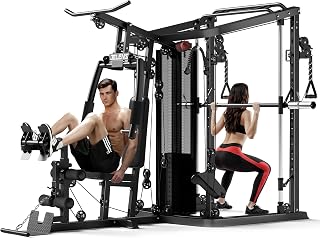
HM01 Home Gym System, 150LB Weight Stack Smith Machine with LAT Pull-Down & Leg Press, All-in-One Strength Training Equipment
Editor's Pick
Our top-three picks Rating
Best for
Most buyers comparing the category
Key feature
Balanced overall feature set
#2

Home Gym System with 160LB Weight Stack, Multifunctional All-in-One Workout Station, Full Body Strength Training System
Strong Choice
Our top-three picks Rating
Best for
Value-focused buyers
Key feature
Strong value for the intended use
#3

Marcy Multifunction Home Gym Workout Station, 100 to 200 lb Weight Stack
Featured Pick
Our top-three picks Rating
Best for
Buyers who want stronger features
Key feature
Higher-spec or more capable configuration
This page compares 5 product options, focused on real buying decisions:
- Use-case and fit, including who the product is for, where it will be used, size or fit, portability where relevant, and expected frequency of use
- Performance and compatibility, including the category-specific specifications, dimensions, capacity, connectivity or power needs, included accessories, and setup that affect real use
- Ownership risk, including maintenance, recurring costs, replacement parts, subscriptions where relevant, warranty/support, returns, and long-term value
SelectRanker connects each comparison to the most relevant category hub, related product comparisons, and practical buying guides. That way, you can check the wider context before ordering.
Best Home Gyms 2027: Top 5 Picks Compared
| Image | Product | Best for | Key feature | View on Amazon |
|---|---|---|---|---|
| HM01 Home Gym System, 150LB Weight Stack Smith Machine with LAT Pull-Down & Leg Press, All-in-One Strength Training EquipmentHM01 Home Gym System, 150LB Weight Stack Smith Machine with LAT Pull-Down & Leg Press, All-in-One Strength Training Equipment | Most buyers comparing the category | Balanced overall feature set | View on Amazon |
| Home Gym System with 160LB Weight Stack, Multifunctional All-in-One Workout Station, Full Body Strength Training SystemHome Gym System with 160LB Weight Stack, Multifunctional All-in-One Workout Station, Full Body Strength Training System | Value-focused buyers | Strong value for the intended use | View on Amazon |
| Marcy Multifunction Home Gym Workout Station, 100 to 200 lb Weight StackMarcy Multifunction Home Gym Workout Station, 100 to 200 lb Weight Stack | Buyers who want stronger features | Higher-spec or more capable configuration | View on Amazon |
 | Mikolo Home Gym, Workout Station with 152LBS Weight Stack, Multifunctional Home Gym Equipment, Exercise Equipment for Full Body Strength TrainingMikolo Home Gym, Workout Station with 152LBS Weight Stack, Multifunctional Home Gym Equipment, Exercise Equipment for Full Body Strength Training | A more specific use case | Useful fit for a narrower use case | View on Amazon |
 | SPORTSROYALS Free Standing Pull Up Bar, Power Tower for Home Gym TrainingSPORTSROYALS Free Standing Pull Up Bar, Power Tower for Home Gym Training | Buyers comparing another solid option | Alternative feature and price balance | View on Amazon |
1) HM01 Home Gym System, 150LB Weight Stack Smith Machine with LAT Pull-Down & Leg Press, All-in-One Strength Training Equipment — Most buyers comparing the category
HM01 Home Gym System
Best for: Most buyers comparing the category
Key feature: Balanced overall feature set
Watch for: Confirm footprint and ceiling clearance, whether the station needs floor anchoring, and that the included attachments cover your must-do movements (pressing, pulling, legs). Also verify the cable ratio/feel for the exercises you care about.
🧐 Quick verdict: A balanced “top home gym” style pick if you want one all-in-one station to anchor your routine.
| Pros ✅ | Cons ⚠️ |
|---|---|
| ✅ Broad exercise coverage in one footprint for an all-in-one setup | ⚠️ Assembly time and space planning matter more than most buyers expect |
| ✅ Good baseline for comparing other home gym reviews (stack size, attachments, frame format) | ⚠️ Cable ratio and pulley path can change “felt weight”—verify for your lifts |
| ✅ Fits buyers who want one main station instead of piecing together multiple machines | ⚠️ Check replacement-part availability and return logistics for large equipment |
Why it’s a top pick: For most shoppers, the “best home gym 2027” is the one that makes training convenient. You want enough movement variety, a sensible layout, and a setup that fits your room without constant compromises.
Decision bullets
- Use-case check: list the 6–10 exercises you will actually do weekly (not the ones you might do once), then confirm this station supports them with the right handles/attachments.
- Space check: measure floor space plus clearance for moving arms/bars and for sitting/lying positions. Don’t forget doorway and delivery path access.
- Resistance check: understand stack weight vs “felt” resistance from cable ratio and pulley routing. Use Home Gym Cable Ratios And Weight Stacks Explained to sanity-check what you’re buying.
SelectRanker tip: If you only do one thing today, measure your room and ceiling height. Fit mistakes are a common reason big home gym purchases turn into returns.
2) Home Gym System with 160LB Weight Stack, Multifunctional All-in-One Workout Station, Full Body Strength Training System — Value-focused buyers
Home Gym System with 160LB Weight Stack
Best for: Value-focused buyers
Key feature: Strong value for the intended use
Watch for: “Value” depends on what’s included. Confirm which handles, bars, and leg/press attachments are in the box, and whether you’ll need add-ons to do your core lifts comfortably.
🧐 Quick verdict: A best value-style pick when you want an all-in-one station and still care about total cost (including missing attachments).
| Pros ✅ | Cons ⚠️ |
|---|---|
| ✅ Strong alternative when budget-to-capability ratio is the priority | ⚠️ Some “bundles” look complete but still require extra handles or adapters |
| ✅ Makes sense for most general strength routines (push/pull/legs) in one system | ⚠️ Verify footprint and clearance—value disappears if it doesn’t fit your room |
| ✅ Good option for shoppers comparing multiple home gym reviews side by side | ⚠️ Check cable ratio and pulley smoothness expectations before buying |
Why it’s a top pick: If Pick #1 is your “do-it-all anchor,” this is the shortlist option when you want similar all-in-one convenience but need a smarter overall spend.
Decision bullets
- Use-case check: make sure it supports your priority movements with comfortable positioning (especially lat pulldowns/rows and any leg work).
- Tradeoff check: confirm what you give up to save money—often attachment variety, adjustment range, or frame format convenience.
- Ownership check: review shipping/assembly expectations and whether replacement cables/parts are easy to source if something wears over time.
SelectRanker tip: “Best value” only wins if it reduces total cost without forcing you to buy multiple add-ons just to make the station usable.
3) Marcy Multifunction Home Gym Workout Station, 100 to 200 lb Weight Stack — Buyers who want stronger features
Marcy Multifunction Home Gym Workout Station
Best for: Buyers who want stronger features
Key feature: Higher-spec or more capable configuration
Watch for: Confirm the exact configuration you’re buying (listed stack range, included stations/attachments, and footprint). With established models, listings can vary by bundle.
🧐 Quick verdict: Best when you want a more traditional, straightforward multi-station home gym layout for repeatable workouts.
| Pros ✅ | Cons ⚠️ |
|---|---|
| ✅ Familiar home gym station format that’s easy to build a routine around | ⚠️ Bundle/configuration details must be verified listing-by-listing |
| ✅ Good choice for consistent training without needing a complicated “system” ecosystem | ⚠️ May not match the versatility of larger all-in-one frames for advanced setups |
| ✅ Often easier for households: clear stations and predictable adjustments | ⚠️ Check seat/arm adjustments for user height fit before committing |
Why it’s a top pick: A “specific use” home gym pick should win when its layout matches how you actually train. In practice, this style works well if you want a predictable station flow (set up once, repeat often).
Decision bullets
- Routine check: map your weekly plan (push/pull/legs or full-body) and confirm the stations cover it without awkward workarounds.
- Fit check: verify seat height, back pad position, and arm/press geometry work for your height and range of motion.
- Resistance check: confirm how the weight stack is described and how it translates to your key movements (see Home Gym Cable Ratios And Weight Stacks Explained).
SelectRanker tip: If multiple people will use the gym, prioritize easy adjustments and a layout that doesn’t require constant reconfiguration between users.
4) Mikolo Home Gym, Workout Station with 152LBS Weight Stack, Multifunctional Home Gym Equipment, Exercise Equipment for Full Body Strength Training — A more specific use case
Mikolo Home Gym
Best for: A more specific use case
Key feature: Useful fit for a narrower use case
Watch for: Compact-friendly doesn’t always mean small. Measure the full operating footprint (including moving arms and bench/seat positions) and confirm you still have safe clearance around it.
🧐 Quick verdict: Best when you need all-in-one strength training capability but must be smarter about footprint and room layout.
| Pros ✅ | Cons ⚠️ |
|---|---|
| ✅ Strong pick when space planning and placement are the deciding factors | ⚠️ You must verify “in-use” clearance, not just the base dimensions |
| ✅ Easier to fit into a garage, spare room, or basement layout than larger frames | ⚠️ Compact designs can limit certain angles, ranges, or exercise setups |
| ✅ Good option for buyers building a home gym 2027 setup in a shared space | ⚠️ Confirm assembly complexity and whether anchoring is recommended |
Why it’s a top pick: Many buyers don’t need the biggest machine. They need the one that fits the room, allows safe movement, and doesn’t block storage, doors, or walkways.
Decision bullets
- Fit check: measure the room, then add clearance for pulldowns, rows, leg movements, and getting on/off the station.
- Workflow check: confirm you can switch between your main exercises without moving the whole machine or constantly re-routing cables.
- Floor check: consider flooring protection, leveling, and stability—especially on garage/basement floors.
SelectRanker tip: A compact pick is only “better” if it still lets you train comfortably. Don’t trade away range of motion just to save a little floor space.
5) SPORTSROYALS Free Standing Pull Up Bar, Power Tower for Home Gym Training — Buyers comparing another solid option
SPORTSROYALS Free Standing Pull Up Bar
Best for: Buyers comparing another solid option
Key feature: Alternative feature and price balance
Watch for: This is a different category than the weight-stack stations above. Make sure you actually want a bodyweight-focused station (pull-ups/dips/knee raises) rather than a cable/stack home gym.
🧐 Quick verdict: Best alternative pick if your “home gym” goal is a sturdy bodyweight tower, not an all-in-one cable/stack machine.
| Pros ✅ | Cons ⚠️ |
|---|---|
| ✅ Excellent complement or substitute when pull-ups/dips are your priority | ⚠️ Does not replace a weight-stack home gym for rows, presses, and leg work |
| ✅ No cables, pulleys, or weight stacks to maintain | ⚠️ Footprint and stability depend on your floor and assembly quality |
| ✅ Can be a smart value choice for simple, frequent training | ⚠️ Verify height/ceiling clearance and grip options match your needs |
Why it’s a top pick: Not everyone needs a full all-in-one machine. If your routine is built around pull-ups, dips, and core work, a power tower can deliver a lot of training value with less mechanical complexity.
Decision bullets
- Goal check: choose this only if bodyweight pushing/pulling is a core part of your plan (or you want to add it to a cable/stack gym later).
- Fit check: confirm overall height vs ceiling clearance, plus handle spacing that feels right for your shoulders.
- Stability check: read reviews for wobble/leveling notes and plan for a flat surface and careful assembly.
SelectRanker tip: If you’re torn between a tower and a weight-stack station, list your top 10 exercises. The option that covers more of them comfortably is usually the better fit.
How we evaluate best home gym options
The SelectRanker scoring lens
To recommend home gym equipment that makes sense for real homes, we focus on what changes everyday use and long-term satisfaction:
- Use-case match, including training style (full-body vs split), user height/fit, household sharing, and how often you will realistically use it
- Useful specifications, focusing on stack/resistance design, adjustment range, station layout, and the movements the machine can perform well
- Compatibility and setup, including footprint, ceiling clearance, floor type, assembly complexity, included attachments, and whether add-ons are required
- Usability and ownership, including smoothness/feel, ease of changing exercises, comfort points (seat/pads/grips), noise, and storage impact
- Ownership risk, including replacement parts (cables/pulleys/pins), support responsiveness, return practicality for heavy items, and long-term value
Before you buy: best home gym
Skip or slow down if these apply
Don’t buy this if…
- You haven’t measured your room (floor space and ceiling clearance) and planned a safe “in-use” area around the machine.
- You’re choosing based only on stack weight or a long exercise list instead of the 6–10 movements you’ll actually do.
- You haven’t checked whether the listing includes the attachments you need (handles, bars, ankle straps, etc.).
- The listing is unclear about replacement parts, warranty coverage, or how returns work for large/heavy shipments.
- You don’t yet understand cable ratio and how it can change felt resistance for your key exercises (see Home Gym Cable Ratios And Weight Stacks Explained).
Good signs you are ready to buy
Buy this if…
- You know your routine and the exercises you want to repeat weekly.
- You’ve confirmed the machine fits your space, including clearance to move safely.
- You’ve checked what’s included (attachments), what might be required (flooring, anchoring, extra handles), and what maintenance looks like (cables/pulleys).
- You want a shortlist of realistic options instead of scrolling endless listings and mixed home gym reviews.
Buyer’s guide to best home gym
Start with the training plan, not the machine
The best home gym is the one that supports the workouts you’ll actually do. A cable/stack station works well for guided pushing/pulling and accessory work. A power tower is ideal for pull-ups, dips, and core. Meanwhile, some “all-in-one” frames prioritize versatility over quick exercise changes.
Performance and features: what matters for home gyms
For home gyms, “performance” comes down to resistance feel, movement quality, and whether the geometry fits your body. Even with a large listed stack, pulley routing and cable ratio can change felt resistance for a given movement.
- Resistance design: weight stack size, pulley routing, and cable ratio (see Home Gym Cable Ratios And Weight Stacks Explained).
- Exercise coverage: confirm the machine does your priority movements well, not just “supports” them technically.
- Adjustability: seat/pad positions, pulley height options, and handle positions matter for comfort and range of motion.
- Stability and feel: frame rigidity, smooth pulley travel, and how easy it is to switch exercises without frustration.
Compatibility, size, setup, and room planning
Most buying regrets come from fit mistakes. Before ordering, confirm the footprint, ceiling clearance, and the “in-use” space needed to move safely. Next, check delivery access (stairs/doorways) and whether the product is realistically returnable if it arrives damaged or doesn’t fit.
If two products solve the same need differently, use the related SelectRanker comparison and buying guides supplied with the page. That extra context makes the tradeoffs clearer.
Build quality, usability, and included attachments
With home gyms, usability drives consistency. Look for straightforward adjustments, comfortable pads/grips, and attachments that match your routine. If you’ll need extra handles, a bench, or floor protection, include that in your real budget.
Maintenance, recurring costs, parts, and ownership
Weight-stack systems can involve wear items like cables, pulleys, and pins. Before buying, check whether replacement parts are available and whether the brand or seller helps when something arrives missing or wears out.
Warranty, returns, support, and long-term value
Large fitness equipment is harder to return than small gear. Verify warranty coverage, what “parts only” vs full coverage means, and how returns work for heavy shipments. For safety, follow the manufacturer’s assembly and use guidance; it takes priority over any buying guide.
Decision table: buyer concern → what it means → what to check
| Concern | Likely cause | What to check before buying |
|---|---|---|
| The home gym feels “too light” even with a big stack | Cable ratio/pulley routing changes felt resistance for that movement | Confirm cable ratio expectations and compare how the machine routes the cable for your key exercises (see Home Gym Cable Ratios And Weight Stacks Explained) |
| The machine doesn’t fit the room or feels cramped to use | Only the base footprint was measured, not the in-use clearance | Measure footprint plus clearance for moving arms/bars, seat positions, and safe walk-around space |
| Workouts feel awkward or uncomfortable | Poor adjustability for your height/limb length or awkward station geometry | Check seat/back pad adjustment range, pulley height options, and user height fit notes in reviews |
| Switching exercises is frustrating | Too many reconfigurations or cable changes required | Look for how the station transitions between push/pull/legs; prioritize layouts that match your routine flow |
| Ownership becomes expensive | Missing attachments, floor protection, or replacement parts add cost | Confirm included handles/bars; check replacement-part availability (cables/pulleys/pins) and any must-buy add-ons |
| Stability or wobble issues | Uneven floor, assembly issues, or design tradeoffs | Check leveling needs, anchoring recommendations, and repeated stability complaints in reviews |
| Feature lists feel impossible to compare | Listings mix marketing terms with non-comparable “exercise counts” | Return to your top 10 exercises, fit/clearance, included attachments, and ownership risk—then compare |
Use the related SelectRanker guides below for deeper category-specific sizing, fit, compatibility, setup, maintenance, and ownership questions.
Common mistakes and quick wins
Quick wins before you buy
- Write your “top 10” exercise list. If the machine doesn’t support those movements comfortably, the rest of the features don’t matter.
- Measure twice: footprint + clearance. Home gyms need room to operate, not just room to sit.
- Check what’s included. Handles, bars, and leg attachments vary by listing—missing pieces can turn a “deal” into a project.
- Learn cable ratio basics. It’s one of the biggest reasons buyers feel surprised by resistance (see Home Gym Cable Ratios And Weight Stacks Explained).
Common mistakes
- Buying based on stack weight alone without understanding pulley routing and felt resistance.
- Skipping room measurements, then discovering the machine blocks doors, storage, or walkways.
- Assuming “100+ exercises” means the machine does your main lifts well.
- Underestimating assembly time and not planning for a second person where needed.
- Ignoring replacement parts, warranty clarity, and the reality of returning heavy equipment.
For deeper context, continue with the related SelectRanker guides covering sizing, specifications, compatibility, setup, maintenance, and closely related product comparisons for this topic.
Related SelectRanker guides
- Explore the broader SelectRanker category guide for this product type: Best Products hub
- Browse more fitness buying guides and comparisons: Fitness hub
- See related equipment roundups and setup ideas: Home Gym Equipment hub
- Understand cable ratios and why stacks don’t always feel like the number on the label: Home Gym Cable Ratios And Weight Stacks Explained
FAQs
1) What should buyers prioritize for the best home gym?
Start with (1) the exercises you’ll actually do weekly, (2) room fit and safe clearance, and (3) resistance design (stack plus cable ratio). Next, compare adjustability for your height, included attachments, assembly complexity, and parts/support risk.
2) How do I know if a weight stack is “enough” for me?
Use your current working weights for key movements as a reference, then account for cable ratio and pulley routing. If you’re already near the top of your current resistance needs, choose a setup that won’t cap progress quickly (and verify cable ratio expectations with Home Gym Cable Ratios And Weight Stacks Explained).
3) What’s the difference between an all-in-one home gym and a power tower?
An all-in-one home gym typically uses cables and a weight stack for presses, rows, pulldowns, and accessory work. A power tower focuses on bodyweight moves like pull-ups, dips, and knee raises. While a tower is simpler to maintain, it won’t replace a cable/stack station for many strength-training exercises.
4) What fit checks should I make before ordering a home gym?
Check base footprint, ceiling height, and “in-use” clearance (space to move arms/bars and get on/off the machine). Also confirm delivery path constraints (doorways, stairs) and whether the machine needs a flat, level surface or anchoring.
5) Do I need to buy extra attachments right away?
Sometimes. Many home gyms include the basics, but handle options vary by listing. Before you buy, match the included attachments to your top exercise list, then plan for any must-have bars or grips so “best value” stays value.
6) Are home gyms hard to assemble?
They can be. Expect multi-step assembly, lots of hardware, and alignment steps that usually go faster with two people. Before ordering, check whether buyers mention unclear instructions, missing parts, and how the seller handles replacements.
7) What should I look for in home gym reviews?
Look for repeat comments about smoothness (pulleys/cables), stability, adjustment range for different heights, and comfort of pads/grips. Also watch for patterns around missing hardware, confusing cable routing, or support responsiveness.
8) What should I check before ordering?
Confirm the exact model or bundle, dimensions and clearance, included attachments, stack/resistance design, assembly requirements, replacement parts availability, warranty coverage, and how returns work for heavy items.
Final verdict on best home gym
If you want the safest first choice, start with Pick #1 because it offers a balanced baseline for exercise coverage, room fit planning, and all-in-one convenience.
Choose Pick #2 when you want strong all-in-one capability with a smarter total-cost approach.
Pick #3 fits best when a more traditional multi-station layout matches your routine and you value repeatable, straightforward workouts.
Go with Pick #4 when space planning is the deciding factor and you still want an all-in-one strength setup.
Pick #5 is the right call when your “best home gym” goal is bodyweight training (pull-ups/dips/core) rather than a weight-stack machine.
For more context, continue with the related SelectRanker category hub and guides listed above.