Best Air Circulators 2027: Top 5 Picks Compared
Searching for the best air circulator gets confusing fast because listings mix “whole-room” claims, noise talk, and speed counts that don’t always match your room, your layout, or your comfort needs.
Instead, the right pick depends on room size and placement (desk vs floor, corner vs doorway), how you’ll use it (sleeping, office, garage, drying), and how much control you want (tilt, speeds, timer, portability).
This SelectRanker guide keeps it simple with an air circulator comparison built around practical fit checks, clear tradeoffs, and what to verify before you buy in 2027.
Top 3 Air Circulators
Compare the first three reviewed products at a glance.
Disclosure: As an Amazon Associate, SelectRanker may earn from qualifying purchases. We may also earn from other affiliate links. This does not change what we recommend or how we compare products.
#1

Vornado 660 Large Air Circulator Fan, 4 Speed, Adjustable Tilt, Black
Editor's Pick
Our top-three picks Rating
Best for
Most buyers comparing the category
Key feature
Balanced overall feature set
#2
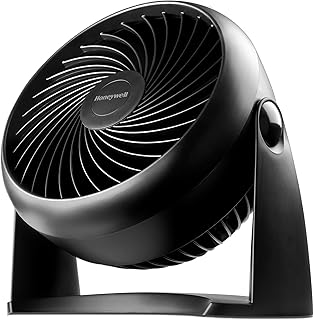
Honeywell TurboForce Air Circulator, Small Tabletop Fan, Quiet Personal Fan for Home or Office, 3 Speeds, 90 Degree Pivoting Head, Black, HT900
Strong Choice
Our top-three picks Rating
Best for
Value-focused buyers
Key feature
Strong value for the intended use
#3

XPOWER FC-300 Heavy Duty Industrial High Velocity Whole Room Air Mover Air Circulator Utility Shop Floor Fan, Variable Speed, Timer, 14 inch, 2100 CFM, Black, Blue
Featured Pick
Our top-three picks Rating
Best for
Buyers who want stronger features
Key feature
Higher-spec or more capable configuration
This page compares 5 product options, focused on real buying decisions:
- Use-case and fit, including where you’ll place it (nightstand, desk, floor, doorway), how far you need airflow to travel, and whether you need portability
- Performance and compatibility, including airflow style (focused jet vs broad blast), speed control, tilt range, cord length and power needs, and how it pairs with AC/heat or open windows
- Ownership risk, including noise expectations, cleaning access (grille/blades), durability for daily vs occasional use, and return/warranty terms
SelectRanker connects each comparison to the most relevant category hub, related product comparisons, and practical buying guides so you can check the wider context before ordering.
Best air circulator 2027: Top 5 picks at a glance
| Image | Product | Best for | Key feature | View on Amazon |
|---|---|---|---|---|
| Vornado 660 Large Air Circulator Fan, 4 Speed, Adjustable Tilt, BlackVornado 660 Large Air Circulator Fan, 4 Speed, Adjustable Tilt, Black | Most buyers comparing the category | Balanced overall feature set | View on Amazon |
| Honeywell TurboForce Air Circulator, Small Tabletop Fan, Quiet Personal Fan for Home or Office, 3 Speeds, 90 Degree Pivoting Head, Black, HT900Honeywell TurboForce Air Circulator, Small Tabletop Fan, Quiet Personal Fan for Home or Office, 3 Speeds, 90 Degree Pivoting Head, Black, HT900 | Value-focused buyers | Strong value for the intended use | View on Amazon |
| XPOWER FC-300 Heavy Duty Industrial High Velocity Whole Room Air Mover Air Circulator Utility Shop Floor Fan, Variable Speed, Timer, 14 inch, 2100 CFM, Black, BlueXPOWER FC-300 Heavy Duty Industrial High Velocity Whole Room Air Mover Air Circulator Utility Shop Floor Fan, Variable Speed, Timer, 14 inch, 2100 CFM, Black, Blue | Buyers who want stronger features | Higher-spec or more capable configuration | View on Amazon |
 | DREO Fan for Bedroom, Table Air Circulator for Whole Room, 11 Inch, 60ft Strong Airflow, 120° adjustable tilt, 20db Low Noise, Quiet, 3 Speeds, Desk Fan for Home,Office, KitchenDREO Fan for Bedroom, Table Air Circulator for Whole Room, 11 Inch, 60ft Strong Airflow, 120° adjustable tilt, 20db Low Noise, Quiet, 3 Speeds, Desk Fan for Home,Office, Kitchen | A more specific use case | Useful fit for a narrower use case | View on Amazon |
 | Lasko Wind Machine Air Circulator Fan – 20" – 3300 – GrayLasko Wind Machine Air Circulator Fan – 20" – 3300 – Gray | Buyers comparing another solid option | Alternative feature and price balance | View on Amazon |
1) Vornado 660 Large Air Circulator Fan, 4 Speed, Adjustable Tilt, Black — Most buyers comparing the category
When you want one circulator that works in most rooms without overthinking it, this is the cleanest “start here” option for 2027.
Best for: Most buyers comparing the category
Key feature: Balanced overall feature set
Watch for: confirm where you’ll place it (table vs floor), how much tilt you need to aim airflow, and whether your layout needs a focused stream (down a hallway/doorway) or a broader breeze.
🧐 Quick verdict: Best overall for most homes because it’s straightforward to aim, easy to live with, and makes a strong baseline for comparing the rest.
| Pros ✅ | Cons ⚠️ |
|---|---|
| ✅ Strong all-around choice for everyday whole-room circulation | ⚠️ Not the cheapest path if you only need a small desk fan |
| ✅ Simple controls and practical tilt for aiming airflow | ⚠️ Like any circulator, placement matters more than speed count |
| ✅ Good baseline pick for comparing noise vs airflow tradeoffs | ⚠️ Verify cleaning access and return terms if you’re noise-sensitive |
Why it’s a top pick: For most buyers, the “best air circulator” is the one you can position quickly, aim easily, and run often. This option is strong enough to move air without forcing an industrial-style footprint.
Decision bullets
- Placement check: decide if it will live on a dresser/nightstand, a desk, or the floor—then confirm the footprint and tilt range match that spot.
- Room-flow check: circulators work best when aimed across the room (or toward/away from an AC vent), not straight at your face like a personal fan.
- Noise tolerance check: if this is for sleep, verify the return window and test it early in your actual room.
SelectRanker tip: For faster “whole-room” results, aim the fan so it creates a loop—across the longest dimension of the room or through a doorway—rather than blasting the nearest seating area.
2) Honeywell TurboForce Air Circulator, Small Tabletop Fan, Quiet Personal Fan for Home or Office, 3 Speeds, 90 Degree Pivoting Head, Black, HT900 — Value-focused buyers
A strong value pick when you want noticeable air movement in a small-to-medium space without paying for a larger footprint or extra complexity.
Best for: Value-focused buyers
Key feature: Strong value for the intended use
Watch for: this style often works best as a personal/desktop circulator. Make sure you’re not expecting it to replace a larger floor model in big living rooms or open layouts.
🧐 Quick verdict: Best value when you want a compact, straightforward circulator for a desk, nightstand, or small room.
| Pros ✅ | Cons ⚠️ |
|---|---|
| ✅ Strong price-to-performance for smaller rooms and desktop use | ⚠️ Limited by size if you need to push air across large open spaces |
| ✅ Simple controls with practical aiming for targeted circulation | ⚠️ Fewer “comfort” extras than some newer quiet-focused models |
| ✅ Easy way to improve AC/heat mixing in a bedroom or office | ⚠️ Verify cord length and placement options for your outlet locations |
Why it’s a top pick: This is the kind of “buy it, place it, feel the difference” option that fits a desk, bedside, or small office. It also helps mix HVAC air without overspending.
Decision bullets
- Use-case check: best for spot circulation (desk/bedroom) and helping HVAC mix air, not for replacing a whole-house fan.
- Tradeoff check: a smaller footprint usually means less reach across large rooms—so aiming matters more.
- Placement check: confirm the pivot/tilt direction works for your surface height (desk vs low table vs floor).
SelectRanker tip: If you’re torn between Pick #1 and Pick #2, choose this one when the fan will live within 3–8 feet of you most of the time (desk, bedside, home office).
3) XPOWER FC-300 Heavy Duty Industrial High Velocity Whole Room Air Mover Air Circulator Utility Shop Floor Fan, Variable Speed, Timer, 14 inch, 2100 CFM, Black, Blue — Buyers who want stronger features
A purpose-built pick for demanding airflow jobs where a typical bedroom/office circulator may feel underpowered or too delicate.
Best for: Buyers who want stronger features
Key feature: Higher-spec or more capable configuration
Watch for: this category leans “utility/air mover.” Before ordering, confirm noise expectations, floor space, and whether you truly need this level of output.
🧐 Quick verdict: Best for high-demand circulation tasks (workspaces, drying, ventilation support) when you want a more industrial approach.
| Pros ✅ | Cons ⚠️ |
|---|---|
| ✅ Better fit for demanding airflow needs than typical home circulators | ⚠️ Can be louder and less “bedroom-friendly” than home-focused models |
| ✅ Useful controls for dialing airflow to the job | ⚠️ Larger footprint and more “shop” styling than living-room decor |
| ✅ Strong option for garages, workshops, and utility use | ⚠️ Verify placement safety (cord routing, stability) in busy areas |
Why it’s a top pick: If your goal is moving a lot of air for a specific task (not just comfort), judge the fan like a tool. Focus on output style, control, stability, and whether it can run the way you’ll actually use it.
Decision bullets
- Job check: decide if you’re buying for comfort (bedroom/office) or for a task (garage airflow, drying, ventilation support). This pick is for the task side.
- Control check: variable control and a timer can matter more than extra “modes” when you’re dialing in drying or airflow direction.
- Environment check: confirm it’s appropriate for your space (traffic areas, pets/kids, dust) and that you have a safe, stable placement.
SelectRanker tip: For utility circulation, aim airflow along walls or across the longest path in the space. That approach often reduces “dead zones” better than pointing straight at the center of the room.
4) DREO Fan for Bedroom, Table Air Circulator for Whole Room, 11 Inch, 60ft Strong Airflow, 120° adjustable tilt, 20db Low Noise, Quiet, 3 Speeds, Desk Fan for Home,Office, Kitchen — A more specific use case
A smart compact choice when you want a modern, small-footprint circulator for a bedroom, desk, or kitchen counter—especially when noise and placement flexibility matter.
Best for: A more specific use case
Key feature: Useful fit for a narrower use case
Watch for: compact fans can be excellent up close, but layout still determines results. Confirm you have a clean airflow path (across the room or toward a doorway/vent).
🧐 Quick verdict: Best compact option when you want a smaller circulator that’s easier to place in tight spaces without feeling flimsy.
| Pros ✅ | Cons ⚠️ |
|---|---|
| ✅ Easier to fit on desks, nightstands, and counters than larger floor models | ⚠️ Smaller size can limit how much air it moves in very large rooms |
| ✅ Useful tilt range for aiming airflow where you actually need it | ⚠️ Verify control style and settings match your preferences (simple vs feature-heavy) |
| ✅ Good choice when you want circulation without a big footprint | ⚠️ Placement is critical—test positions during the return window |
Why it’s a top pick: Many buyers don’t need the biggest fan. What they need is a circulator that fits where it will actually live (bedside, desk, countertop) and feels comfortable to run for hours.
Decision bullets
- Fit check: confirm the fan’s footprint fits your surface with safe clearance (curtains, papers, cords, and edges).
- Sleep/office check: if this is for a bedroom, prioritize the noise profile you can tolerate over “max airflow” claims.
- Aiming check: tilt range matters—especially if the fan sits low and needs to push air upward across the room.
SelectRanker tip: For bedrooms, try aiming the fan to skim along a wall rather than directly at the bed. You’ll often get better overall circulation with less perceived draft.
5) Lasko Wind Machine Air Circulator Fan – 20" – 3300 – Gray — Buyers comparing another solid option
A classic larger-format circulator style that can make sense when you want a bigger “floor fan” feel for moving air in living spaces.
Best for: Buyers comparing another solid option
Key feature: Alternative feature and price balance
Watch for: larger fans can push air well, but they take up real floor space. Before you commit, confirm where it will sit so it won’t become an obstacle.
🧐 Quick verdict: Best alternative pick when you want a larger, straightforward circulator for open rooms and don’t mind the footprint.
| Pros ✅ | Cons ⚠️ |
|---|---|
| ✅ Strong “move air now” feel for larger living spaces | ⚠️ Bigger footprint than compact desk/bedroom circulators |
| ✅ Simple, no-nonsense operation for everyday use | ⚠️ Not as easy to tuck away in small bedrooms or tight offices |
| ✅ Good option when you prefer a traditional floor-fan form factor | ⚠️ Verify cleaning access and noise expectations before committing |
Why it’s a top pick: Some buyers simply want a bigger, more traditional air-moving presence for a living room, den, or open area. This gives you that alternative path without stepping into industrial “air mover” territory.
Decision bullets
- Budget check: value comes from fit and usefulness—make sure you’ll actually use the larger form factor instead of storing it.
- Use-case check: best when you want broad room airflow and don’t need a tiny desk fan or a utility-grade mover.
- Space check: plan a home for it (wall-side, corner, under a console) so it doesn’t become a trip hazard.
SelectRanker tip: In open layouts, aim the fan to support your HVAC path—toward a hallway, staircase, or return area—so the airflow does more than cool the nearest spot.
How we evaluate best air circulator options
The SelectRanker scoring lens
To recommend air circulators that make sense for real homes (not just product pages), we focus on what changes day-to-day comfort and ownership:
- Use-case match, including bedroom vs office vs living room vs garage, how far you need airflow to travel, and whether it’s for comfort or a task
- Useful specifications, focusing on control (speeds/variable control), aiming (tilt/pivot), and airflow style (focused stream vs broad breeze) rather than marketing phrases
- Compatibility and setup, including footprint, stability, cord routing, outlet location, and whether the fan can be positioned to create a circulation loop
- Usability and ownership, including control simplicity, nighttime comfort, portability, storage, and cleaning access
- Ownership risk, including noise expectations, durability for your duty cycle, replacement-part considerations where applicable, and return/warranty clarity
Before you buy: best air circulator
Skip or slow down if these apply
Don’t buy this if…
- You haven’t decided whether you need a compact desk/bedside circulator, a larger floor model, or a utility-focused air mover.
- You’re buying based on “whole-room” wording without a plan for placement (across the room, toward a doorway, or to mix HVAC air).
- You haven’t checked the footprint and tilt/pivot range for where it will actually sit (nightstand, desk, floor corner).
- The listing is unclear about returns and warranty—important if you’re sensitive to noise.
- You need a different product type (for example, a tower fan for directional personal cooling). If that’s you, compare with Best Tower Fan” target=”_blank” rel=”noopener”>Best Tower Fans 2027.
Good signs you are ready to buy
Buy this if…
- You know the room and the job: sleep comfort, office airflow, HVAC mixing, or a garage/workshop task.
- You have a realistic placement plan (across the room, toward a vent/doorway, or to create a circulation loop).
- You’ve considered noise tolerance and will test it in your space during the return window.
- You want a short, buyer-focused list instead of scrolling through endless air circulator reviews.
Buyer’s guide to best air circulator
Start with the room, placement, and airflow path
Air circulators work best when they move air through the room, not just at you. Because of that, your placement option (desk, dresser, floor corner, doorway) often decides whether you feel a meaningful difference.
Performance and features: what matters for an air circulator 2027 purchase
For a top air circulator, the most important “specs” are practical: how easily you can aim it, how controllable the airflow is, and whether it matches your noise tolerance for the room it’s in.
- Airflow style: focused streams can reach farther down a hallway; broader airflow can feel more comfortable nearby.
- Aiming and adjustment: tilt/pivot range matters for directing air across a room instead of straight into your face.
- Controls: simple speeds can be ideal for bedrooms; variable control/timers can help for utility tasks or dialing in comfort.
- Noise comfort: “quiet” is subjective—plan to validate it in your actual room.
Compatibility, size, setup, and everyday living
Before ordering, verify the details that decide whether you’ll keep using it: footprint, stability on your surface, cord length/outlet access, and whether you can place it where it creates a useful airflow path.
If you’re not sure whether you need a circulator or a different fan style, use the related SelectRanker comparisons below to understand the tradeoff.
Build quality, cleaning, and long-term usability
Air circulators often run for long stretches, so easy cleaning and solid stability matter. To avoid frustration later, check how dust is likely to build up, whether the grille is easy to wipe, and whether the base feels stable for your home (pets, kids, high-traffic areas).
Maintenance, recurring costs, parts, and ownership
Most air circulators don’t have consumables, but ownership still includes cleaning time, space to store it when not in use, and the risk of a return if the noise profile doesn’t work for you. For bedroom use, prioritize clear return terms.
Warranty, returns, support, and long-term value
Follow the manufacturer’s safety and placement guidance. When you buy online, make sure warranty coverage and returns are clearly stated—especially for larger fans that can be annoying to ship back.
Decision table: buyer concern → what it means → what to check
| Concern | Likely cause | What to check before buying |
|---|---|---|
| The fan doesn’t seem to “do much” | Placement isn’t creating a circulation loop or the fan is undersized for the space | Plan placement (across room/doorway/vent), then choose a size/output style that fits the room |
| It cools me but not the room | It’s being used like a personal fan instead of a circulator | Aim airflow across the longest path in the room; consider doorway/vent positioning |
| It doesn’t fit where I need it | Footprint, height, or tilt/pivot range was overlooked | Measure the surface/floor spot and confirm tilt/pivot range and stability |
| It’s too loud at night | Noise tolerance mismatch or wrong speed setting for sleep | Prioritize return terms; test in your bedroom early and consider a compact/quiet-focused option |
| It’s inconvenient to use daily | Controls, cleaning access, or portability don’t match your routine | Check control style, handle/portability, cord routing, and cleaning access |
| It’s overkill for my needs | Utility/industrial output when you only needed comfort circulation | Be honest about the job: comfort vs drying/garage; pick the smallest tool that solves it |
| Feature lists feel impossible to compare | Marketing terms aren’t standardized across brands | Compare placement fit, airflow style, adjustment, controls, noise comfort, and return policy |
Use the related SelectRanker guides below for deeper category-specific sizing, placement, and fan-type comparisons.
Common mistakes and quick wins
Quick wins before you buy
- Pick the placement first. Decide desk vs dresser vs floor corner vs doorway—then choose size and tilt range that fits.
- Use it to create a loop. Point it across the room or toward a doorway/vent to mix air, not straight at your face.
- For bedrooms, prioritize returns. Noise comfort is personal; test it in your room during the return window.
- Read the 1–3 star reviews for patterns. Look for repeated complaints about rattles, awkward controls, cleaning difficulty, or disappointing airflow reach.
Common mistakes
- Buying the biggest model without considering where it will sit (and then never using it).
- Assuming “quiet” means the same thing across all brands and rooms.
- Using a circulator like a personal fan and being disappointed with “whole-room” results.
- Ignoring tilt/pivot range—then realizing you can’t aim airflow where you need it.
- Skipping return-policy details for bulky fans that are annoying to ship back.
For deeper context, continue with the related SelectRanker guides covering fan types, room comfort strategies, and closely related comparisons.
Related SelectRanker guides
- Best Products hub” target=”_blank” rel=”noopener”>Explore the broader SelectRanker category guide for this product type.
- Home Appliances hub” target=”_blank” rel=”noopener”>Browse more home appliance picks and comparisons.
- Heating Cooling hub” target=”_blank” rel=”noopener”>See more heating and cooling guides, including fans and room-comfort upgrades.
- Best Tower Fan” target=”_blank” rel=”noopener”>Compare against a different fan style: Best Tower Fans 2027
FAQs
1) What should buyers prioritize for best air circulator performance?
Start with placement fit (desk vs floor), then prioritize aiming control (tilt/pivot) and airflow style (focused reach vs broader breeze). After that, check noise comfort for the room (especially bedrooms) and confirm return/warranty terms in case it’s not a match.
2) How do I choose the right air circulator size for my room?
Match the fan to the space and the job. For a bedside or desk, a compact circulator is often enough. If you’re working with larger living rooms or open layouts, a larger floor model can make more sense. For garages, workshops, or drying tasks, consider a utility-style air mover. Don’t oversize unless you have a clear placement plan and you’ll actually use the extra output.
3) Which air circulator features matter most in 2027?
For most air circulator 2027 shoppers, the most useful “specs” are practical: tilt/pivot range, speed control (simple steps vs variable), stability/footprint, and whether the airflow feels focused or wide. Treat marketing terms like “whole room” as a starting point, not a guarantee.
4) What fit checks should I make before ordering an air circulator?
Measure the surface or floor spot, confirm the fan’s footprint, and make sure the tilt/pivot can aim where you need. Also check outlet location (cord routing), clearance around curtains/papers, and whether you can place it to push air across the room or through a doorway.
5) When is a higher-end air circulator worth it?
It can be worth it if you’ll run it daily and care about a better balance of airflow, control, and livability (especially in bedrooms). For occasional use or small spaces, a value pick can be the smarter move—as long as it fits your placement and delivers the airflow you actually need.
6) Is it safe to buy an air circulator online?
Yes—if the listing clearly states the model, dimensions, control features, and return policy. With fans, returns matter because noise comfort and airflow feel are hard to judge from a product page alone.
7) What’s the difference between an air circulator and a regular fan?
A regular fan is often used for direct personal cooling. An air circulator is typically aimed to move air through the room—helping mix hot/cold spots and improving HVAC comfort. Because many products overlap, focus on how you’ll place and aim it.
8) What should I check in reviews before I buy?
Confirm the exact model, footprint, tilt/pivot range, control type, and return/warranty terms. Next, scan air circulator reviews for repeated complaints about rattling, weak airflow for the intended use, or hard-to-clean grilles.
Final verdict on best air circulator
If you want the safest first choice, start with Pick #1 because it’s the most balanced option for everyday room circulation and easy comparison against the field.
Choose Pick #2 when you want strong value for a desk, bedside, or small-room setup.
Pick #3 fits best when you need a more task-focused, utility-style airflow solution.
Go with Pick #4 when you want a compact, modern circulator that’s easier to place in tight spaces.
Choose Pick #5 when you prefer a larger, straightforward floor-fan style alternative for moving air in bigger living spaces.
For more context, continue with the related SelectRanker category hub and guides listed above.