Best dehumidifier: Best Dehumidifiers 2027: Top 5 Picks Compared
Choosing the best dehumidifier is usually less about chasing the biggest “pints per day” number and more about matching the unit to your room size, moisture level, and drainage plan. Noise, emptying, maintenance, and placement matter just as much once you live with it.
This SelectRanker roundup for best dehumidifier 2027 focuses on what changes real outcomes: capacity that fits your space, practical drainage options, easy day-to-day use, and ownership details that still matter after the first week.
If you’re comparing a top dehumidifier for a basement, garage, bedroom, or a tougher moisture problem, the picks below keep the comparison straightforward. Instead of vague marketing terms, we focus on the checks that affect real-life results.
Top 3 Dehumidifiers
Compare the first three reviewed products at a glance.
Disclosure: As an Amazon Associate, SelectRanker may earn from qualifying purchases. We may also earn from other affiliate links. This does not change what we recommend or how we compare products.
#1

Midea 50 Pint Dehumidifier for Basement, 4,500 Sq. Ft, Energy star
Editor's Pick
Our top-three picks Rating
Best for
Most buyers comparing the category
Key feature
Balanced overall feature set
#2

Waykar 34 Pints 2000 Sq. Ft. 2025 Energy Star Dehumidifier for Home
Strong Choice
Our top-three picks Rating
Best for
Value-focused buyers
Key feature
Strong value for the intended use
#3

Midea Cube 20 Pint Dehumidifier for Basement, 1,500 Sq. Ft, Energy star
Featured Pick
Our top-three picks Rating
Best for
Buyers who want stronger features
Key feature
Higher-spec or more capable configuration
This page compares 5 product options, focused on real buying decisions:
- Use-case and fit, including where you’ll run it (basement/bedroom/garage), coverage claims vs your real room size, noise tolerance, and whether you need portability
- Performance and compatibility, including pint capacity class, humidity control approach, drainage options (bucket vs hose vs pump), and the setup details that affect real use
- Ownership risk, including filter cleaning, defrost behavior in cooler basements, drain routing, service/support expectations, and long-term value
SelectRanker connects each comparison to the most relevant category hub, related product comparisons, and practical buying guides. That way, you can check the wider context before ordering.
Best dehumidifier 2027: Top 5 picks compared
| Image | Product | Best for | Key feature | View on Amazon |
|---|---|---|---|---|
| Midea 50 Pint Dehumidifier for Basement, 4,500 Sq. Ft, Energy starMidea 50 Pint Dehumidifier for Basement, 4,500 Sq. Ft, Energy star | Most buyers comparing the category | Balanced overall feature set | View on Amazon |
| Waykar 34 Pints 2000 Sq. Ft. 2025 Energy Star Dehumidifier for HomeWaykar 34 Pints 2000 Sq. Ft. 2025 Energy Star Dehumidifier for Home | Value-focused buyers | Strong value for the intended use | View on Amazon |
| Midea Cube 20 Pint Dehumidifier for Basement, 1,500 Sq. Ft, Energy starMidea Cube 20 Pint Dehumidifier for Basement, 1,500 Sq. Ft, Energy star | Buyers who want stronger features | Higher-spec or more capable configuration | View on Amazon |
 | AEOCKY 5500 Sq.Ft Energy Star Version 6.0 Dehumidifier for HomeAEOCKY 5500 Sq.Ft Energy Star Version 6.0 Dehumidifier for Home | A more specific use case | Useful fit for a narrower use case | View on Amazon |
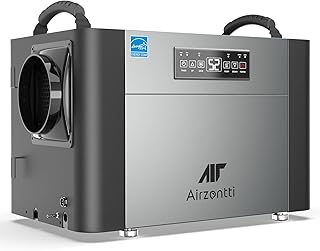 | 155 Pint Commercial Dehumidifier with Pump and Drain, Energy Star155 Pint Commercial Dehumidifier with Pump and Drain, Energy Star | Buyers comparing another solid option | Alternative feature and price balance | View on Amazon |
1) Midea 50 Pint Dehumidifier for Basement, 4,500 Sq. Ft, Energy star — Most buyers comparing the category
For a common “problem basement / damp lower level” scenario, this is the best overall starting point. It sits in a mainstream capacity class, uses familiar controls, and follows a setup style most households can live with.
Best for: Most buyers comparing the category
Key feature: Balanced overall feature set
Watch for: confirm your drainage plan (bucket vs gravity hose), where the condensate will go, and whether the unit will run in a cooler basement where defrost behavior matters.
🧐 Quick verdict: A safe “buy once” pick for most homes that need dependable moisture control without stepping into commercial-grade complexity.
| Pros ✅ | Cons ⚠️ |
|---|---|
| ✅ Strong all-around choice for typical basement and whole-floor dampness | ⚠️ Coverage claims are not the same as your real room conditions—size for moisture, not just square feet |
| ✅ Good baseline for comparing smaller “bedroom” units and larger “flood-prone” options | ⚠️ Drainage setup (hose routing, floor drain access) can make or break day-to-day convenience |
| ✅ Practical feature set for set-and-forget humidity control | ⚠️ Verify noise expectations if it will run near living spaces |
Why it’s a top pick: Most shoppers reading dehumidifier reviews want one thing: comfortable humidity without constant emptying, fiddling, or surprises. This pick earns “default best dehumidifier” status because it balances capacity, everyday usability, and straightforward setup.
Decision bullets
- Use-case check: confirm you’re shopping for a basement/whole-floor unit (not a tiny closet unit or a commercial restoration machine).
- Drainage check: decide whether you will empty a bucket, run a gravity hose to a drain, or need a pump-style solution.
- Environment check: if your basement runs cool, read the listing/manual notes on low-temperature operation and defrost behavior.
SelectRanker tip: If you’re unsure on sizing, use our pint-capacity explainer before you buy: Dehumidifier Pint Capacity Guide.
2) Waykar 34 Pints 2000 Sq. Ft. 2025 Energy Star Dehumidifier for Home — Value-focused buyers
When you want solid moisture control for a smaller footprint (or a less intense dampness problem), this is the value-oriented pick in our 2027 comparison. You avoid paying for extra capacity you won’t use.
Best for: Value-focused buyers
Key feature: Strong value for the intended use
Watch for: value depends on fit—verify your room size, how wet the space gets, and whether you can live with bucket emptying or need continuous drainage.
🧐 Quick verdict: A smarter buy when your space doesn’t justify a larger-capacity basement unit.
| Pros ✅ | Cons ⚠️ |
|---|---|
| ✅ Strong value when matched to the right room size and moisture level | ⚠️ If the space is very damp, you may need to empty more often or step up in capacity |
| ✅ Easier to justify for apartments, bedrooms, and smaller basements | ⚠️ Coverage numbers vary by conditions—don’t size by square feet alone |
| ✅ Good alternative to the “best overall” when budget is the constraint | ⚠️ Confirm drain hose compatibility and routing if you want continuous drainage |
Why it’s a top pick: A “best value” dehumidifier should still do the job reliably, not just look good on a spec sheet. This pick fits shoppers who want a capable unit for moderate dampness and prefer to avoid extra capacity, weight, and footprint.
Decision bullets
- Use-case check: best for moderate humidity control in smaller spaces, not severe moisture or restoration work.
- Tradeoff check: lower capacity can mean more run time or more frequent emptying in wetter conditions.
- Ownership check: confirm filter access/cleaning and how you’ll handle drainage day to day.
SelectRanker tip: If the space smells musty, look for the moisture source too. Dehumidifiers help, but they don’t replace fixing leaks, seepage, or ventilation problems.
3) Midea Cube 20 Pint Dehumidifier for Basement, 1,500 Sq. Ft, Energy star — Buyers who want stronger features
For a more specific use case, this pick suits buyers who want a smaller-capacity unit with a design that can be easier to live with. It’s a good fit when you dehumidify regularly and don’t want to babysit a small bucket.
Best for: Buyers who want stronger features
Key feature: Higher-spec or more capable configuration
Watch for: confirm where the collected water goes in your setup (container style and access), and double-check that the capacity class matches your room size and humidity level.
🧐 Quick verdict: Best when a smaller-space dehumidifier still needs to be convenient for frequent, ongoing use.
| Pros ✅ | Cons ⚠️ |
|---|---|
| ✅ Good match for targeted dampness control without going to a large basement unit | ⚠️ Smaller capacity means it can take longer to pull a very wet space down |
| ✅ Design can be more convenient for day-to-day water management | ⚠️ Still requires planning for drainage, placement, and clearance |
| ✅ Useful “specific use” alternative in a dehumidifier 2027 shortlist | ⚠️ Verify footprint and access if it will sit in a tight corner or utility area |
Why it’s a top pick: Not everyone needs a big 50-pint-class unit. When your priority is a manageable unit for a smaller basement area, a bedroom-adjacent space, or a targeted damp zone, a purpose-built design can be the better “live with it every day” choice.
Decision bullets
- Performance check: size this to your real moisture load (musty air vs visibly damp surfaces vs water intrusion).
- Workflow check: confirm how you’ll empty it or whether you’ll set up continuous drainage.
- Placement check: verify clearance around air intake/exhaust and access to remove/clean the filter.
SelectRanker tip: If you’re torn between two sizes, choose the one that makes continuous drainage easiest. In practice, convenience drives consistency.
4) AEOCKY 5500 Sq.Ft Energy Star Version 6.0 Dehumidifier for Home — A more specific use case
If you have a large basement and want to control humidity across a bigger footprint, this pick targets higher-capacity home use. Smaller units can feel like they’re always running but never catching up.
Best for: A more specific use case
Key feature: Useful fit for a narrower use case
Watch for: larger-capacity home units often mean more weight and a bigger footprint—confirm placement, clearance, and your drain route before ordering.
🧐 Quick verdict: Best when a big, damp basement needs more capacity than a typical “value” unit can realistically deliver.
| Pros ✅ | Cons ⚠️ |
|---|---|
| ✅ Better match for large-basement humidity control than smaller pint classes | ⚠️ Bigger units can be louder and less pleasant near living spaces |
| ✅ Can reduce how often you need to think about humidity management | ⚠️ You still need a good drainage plan to avoid frequent emptying |
| ✅ Strong pick when “coverage” is the main constraint | ⚠️ Verify physical size, mobility, and storage if it’s seasonal |
Why it’s a top pick: Large basements create a duty-cycle problem. If the unit is too small, it may run constantly, fill quickly, and still leave humidity high. A higher-capacity home dehumidifier can be a better long-term experience when it truly matches your space and moisture load.
Decision bullets
- Fit check: confirm the unit’s footprint and clearance needs for your basement layout.
- Drainage check: continuous drainage is strongly recommended at this capacity level—verify hose hookup and drain location.
- Reality check: if you have water intrusion or flooding, address the source; capacity alone won’t fix that problem.
SelectRanker tip: Big basements often do better with central placement and doors open to connected areas. Otherwise, you can dry one zone while another stays damp.
5) 155 Pint Commercial Dehumidifier with Pump and Drain, Energy Star — Buyers comparing another solid option
This is the “serious moisture” option: a commercial-style dehumidifier intended for tougher environments where household units may be overwhelmed or impractical.
Best for: Buyers comparing another solid option
Key feature: Alternative feature and price balance
Watch for: commercial units can be heavier, louder, and more demanding on placement and drainage—confirm power needs, pump/drain setup, and return logistics before you buy.
🧐 Quick verdict: Best when you need high extraction and continuous drainage for severe dampness, restoration-type scenarios, or commercial spaces.
| Pros ✅ | Cons ⚠️ |
|---|---|
| ✅ Built for demanding moisture loads where home units can struggle | ⚠️ Overkill for normal home humidity control (cost, size, noise) |
| ✅ Better suited to continuous drainage workflows | ⚠️ Setup and movement can be less convenient than consumer models |
| ✅ Strong choice for commercial/severe moisture use cases | ⚠️ Verify power, pump/drain details, and service/support expectations |
Why it’s a top pick: When moisture is severe, the right dehumidifier is the one that can keep up without constant attention. A commercial-style unit can make sense for restoration, very damp basements, job sites, or commercial areas—especially when continuous drainage is part of the plan.
Decision bullets
- Use-case check: choose this for severe moisture or commercial workflows, not normal household comfort control.
- Drainage check: confirm pump/drain routing and where the water will be discharged.
- Logistics check: verify weight/handling, noise expectations, and return practicality for a large unit.
SelectRanker tip: If you’re dealing with water damage, prioritize drying speed and continuous drainage. However, you should also address the source and follow official remediation guidance for your situation.
How we evaluate best dehumidifier options
The SelectRanker scoring lens
To recommend a dehumidifier that makes sense for real homes (not just spec-sheet comparisons), we focus on what changes day-to-day results and ownership.
- Use-case match, including room size, moisture severity, basement temperature, and whether the unit is for comfort or for severe dampness/restoration
- Useful specifications, focusing on pint class, realistic coverage expectations, humidity control behavior, and whether the design supports continuous drainage
- Compatibility and setup, including footprint/clearance, hose hookup, drain access, pump needs (if applicable), and power requirements
- Usability and ownership, including noise, bucket access, mobility, filter cleaning, and whether you can run it consistently without hassle
- Ownership risk, including maintenance needs, replacement filters/parts availability where applicable, warranty/support clarity, and return practicality for heavy units
Before you buy: best dehumidifier
Skip or slow down if these apply
Don’t buy this if…
- You haven’t identified the problem (mild humidity vs persistent dampness vs water intrusion) and the space size you need to control.
- You’re choosing only by the biggest square-foot claim instead of your moisture level, basement temperature, and drainage plan.
- You have no practical way to drain it (and you know you won’t empty a bucket consistently).
- The listing is unclear about drainage options, filter access, or return logistics for a heavy appliance.
- You’re expecting a dehumidifier to solve mold, leaks, or flooding without addressing the source issue.
Good signs you are ready to buy
Buy this if…
- You know the space size and the severity of the dampness you’re trying to control.
- You’ve decided on bucket emptying vs continuous drainage (and you know where the water will go).
- You’ve checked placement, clearance, noise expectations, and whether the unit will run in a cool basement area.
- You want a clear shortlist instead of juggling dozens of dehumidifier reviews that don’t match your use case.
Buyer’s guide to best dehumidifier
Start with the space: size + moisture level + temperature
The same “square footage” can need very different dehumidifier capacity depending on how wet the space gets, how often doors are opened, and whether the area is cool (common in basements). Start by sizing for the moisture problem, then sanity-check the coverage claims.
Performance and features: drainage is the real make-or-break
For most buyers, the best feature isn’t an app or a special mode. Instead, it’s a setup that makes water removal easy. If you can run continuous drainage, you’ll use the dehumidifier more consistently, which usually means better results.
- Capacity class: match pint rating to your moisture level and how quickly you need results.
- Drainage options: bucket access, gravity hose hookup, and pump capability (if you need to drain upward or across a distance).
- Humidity control: look for controls that let you set a target humidity and maintain it without constant babysitting.
- Noise and placement: basement utility room is different from a near-bedroom hallway—plan accordingly.
Compatibility, size, setup, and “where does the water go?”
Before ordering, confirm the practical details: footprint and clearance, drain location, hose routing, whether you have a floor drain/sump/laundry sink, and whether you need a pump. These are common reasons a “top dehumidifier” turns into a return.
If you’re unsure about sizing, start here: Dehumidifier Pint Capacity Guide.
Maintenance and day-to-day ownership
Most home dehumidifiers are simple to maintain, but easy filter access still matters. Plan for filter cleaning, occasional wiping of the bucket/tank area, and keeping the air intake unobstructed.
Where a dehumidifier fits in your air-quality stack
A dehumidifier controls moisture, while an air purifier targets airborne particles and odors. If you’re also dealing with dust, smoke, or allergens, compare our purifier picks: Best Air Purifier. For dry climates or winter dryness, see: Best Humidifier.
Decision table: buyer concern → what it means → what to check
| Concern | Likely cause | What to check before buying |
|---|---|---|
| The unit runs constantly but humidity stays high | Capacity class is too small for the moisture load (or doors/windows keep adding humidity) | Step up in pint class; improve sealing/ventilation; consider continuous drainage so it can run longer without stopping |
| You’re emptying the bucket too often | High moisture load + bucket-only workflow | Confirm gravity hose hookup or pump option; verify you have a drain location and hose routing plan |
| It doesn’t fit the space where you need it | Footprint/clearance and access (bucket removal, filter cleaning) were overlooked | Measure placement area; confirm clearance on intake/exhaust sides; confirm access to remove tank and filter |
| Noise is more annoying than expected | Placement near living/sleeping areas or hard surfaces amplifying sound | Plan placement; consider a smaller unit for near-bedroom use; verify return policy if noise sensitivity is a concern |
| Performance drops in a cool basement | Low-temperature operation/defrost behavior limits are being reached | Check operating temperature guidance in the listing/manual; consider a unit intended for basement conditions |
| Ownership becomes expensive or frustrating | Wrong capacity, poor drainage plan, or awkward maintenance workflow | Re-check capacity guide, drainage setup, filter access, and return logistics before committing |
| You’re unsure what “coverage” means | Square-foot claims vary by test conditions | Use pint class + moisture severity + drainage convenience as primary decision factors, not coverage alone |
Use the related SelectRanker guides below for deeper category-specific sizing, fit, compatibility, setup, maintenance, and ownership questions.
Common mistakes and quick wins
Quick wins before you buy
- Prioritize drainage first. If you can set up a gravity hose (or need a pump), decide that before you compare brands.
- Size for moisture, not just square feet. A damp basement with seepage needs more capacity than a same-size room with mild humidity.
- Measure the placement. Make sure you can access the bucket/tank and filter without moving the unit every time.
- Read the 1-star reviews for patterns. Look for repeated complaints about leaks, sensor behavior, noise, hose hookup issues, or difficult returns.
Common mistakes
- Buying the biggest “coverage” claim and then realizing there’s no easy way to drain it.
- Choosing a small unit for a very damp basement, then getting frustrated by constant emptying.
- Ignoring cool-basement operation considerations and defrost behavior.
- Placing the unit in a corner with poor airflow, which hurts performance.
- Expecting a dehumidifier to fix leaks, seepage, or water intrusion without addressing the underlying issue.
For deeper context, continue with the related SelectRanker guides covering sizing, specifications, compatibility, setup, maintenance, and closely related product comparisons for this topic.
Related SelectRanker guides
- Start at the main hub: Best Products hub
- More home picks: Home Appliances hub
- More air-quality coverage: Air Quality hub
- Related comparisons: Best Air Purifier and Best Humidifier
- Helpful sizing and spec guides: Dehumidifier Pint Capacity Guide, Air Purifier Cadr Room Size Guide, and Hepa Vs Activated Carbon Filter
FAQs
1) What matters most when choosing the best dehumidifier for my space?
Start with (1) a capacity class that matches your moisture level, (2) a drainage plan you’ll actually use (bucket vs hose vs pump), and (3) placement and noise fit for where it will run. After that, compare usability details like filter access, tank access, and control simplicity.
2) Is “square footage coverage” a reliable way to choose a dehumidifier?
It’s a rough starting point, but it isn’t fully reliable because humidity level, temperature, air leakage, and water sources change the real workload. Use coverage claims alongside pint capacity class and drainage convenience, then size up if your space is truly damp or cool.
3) When do I need a dehumidifier with a pump?
You typically need a pump when you can’t drain downhill by gravity, such as when the only sink is higher than the unit or the drain run is long. If you have a floor drain or sump nearby, a gravity hose setup is often simpler.
4) What humidity setting should I use in a basement?
Many households aim for a comfortable mid-range humidity, but the right setting depends on your climate and how the space is used (storage vs finished basement). A practical goal is to reduce musty odor and dampness without over-drying. If you’re unsure, start moderate and adjust based on comfort and condensation.
5) Why do some dehumidifiers struggle in cool basements?
In cooler temperatures, dehumidifiers can ice up or cycle into defrost more often, which reduces water removal. If your basement stays cool, check the manufacturer’s operating temperature guidance and buyer feedback about low-temp performance before buying.
6) Is it safe to buy a dehumidifier online?
It can be, as long as the listing clearly states drainage options, physical dimensions, and return terms. For larger units, also verify shipping/return logistics and whether you can realistically move it into place.
7) What do dehumidifier reviews often miss?
Water handling is the big one. A unit that’s slightly less “featured” but easy to drain (or easy to run continuously) often works better in real life because you’ll actually run it consistently.
8) What should I confirm right before ordering a dehumidifier?
Confirm capacity class, drainage method (and required hose/pump setup), footprint and clearance, noise expectations for the room, and operating guidance for cooler spaces. Finally, double-check warranty and returns—especially for heavy or commercial-style models.
Final verdict on best dehumidifier
If you want the safest first choice, start with Pick #1 because it gives you a clean baseline for use-case fit, drainage practicality, everyday usability, and ownership risk.
Choose Pick #2 when you want strong value for a smaller space or moderate dampness without paying for extra capacity you won’t use.
Pick #3 makes sense when a specific small-to-mid space need calls for a design that stays convenient with frequent use.
Go with Pick #4 when you’re trying to control humidity across a large basement footprint and smaller units won’t keep up.
Choose Pick #5 when severe moisture or commercial/restoration-style use demands higher extraction and continuous drainage.
For more context, continue with the related SelectRanker category hub and guides listed above.