Best jump starter
Choosing the best jump starter comes down to fit, not hype. Match the unit to your vehicle type, engine size, storage space, and how you’ll actually use it (emergency-only vs. frequent starts, cold weather, travel, or keeping one in multiple vehicles).
This SelectRanker jump starter comparison stays practical: what each pick is best for, what to verify before checkout, and which tradeoffs matter once you own it.
For broader context, start with the hubs: Best Products hub → Automotive hub → Car Power Maintenance hub. For sizing and power terminology, see: Jump Starter Peak Amps Explained.
Top 3 Jump Starters
Compare the first three reviewed products at a glance.
Disclosure: As an Amazon Associate, SelectRanker may earn from qualifying purchases. We may also earn from other affiliate links. This does not change what we recommend or how we compare products.
#1

NOCO Boost GB40 12V 1000A UltraSafe Portable Lithium Jump Starter
Editor's Pick
Our top-three picks Rating
Best for
Most buyers comparing the category
Key feature
Balanced overall feature set
#2

NOCO Boost GB70 2000A UltraSafe Jump Starter, 12V Lithium Battery Booster
Strong Choice
Our top-three picks Rating
Best for
Value-focused buyers
Key feature
Strong value for the intended use
#3

GOOLOO A9 Ultra Jump Starter with Air Compressor – 6000A & 160PSI Jump Box
Featured Pick
Our top-three picks Rating
Best for
Buyers who want stronger features
Key feature
Higher-spec or more capable configuration
This page compares 5 product options, focused on real buying decisions:
- Use-case and fit, including who the product is for, where it will be used, size or fit, portability where relevant, and expected frequency of use
- Performance and compatibility, including the category-specific specifications, dimensions, capacity, connectivity or power needs, included accessories, and setup that affect real use
- Ownership risk, including maintenance, recurring costs, replacement parts, subscriptions where relevant, warranty/support, returns, and long-term value
SelectRanker connects each comparison to the most relevant category hub, related product comparisons, and practical buying guides so you can check the wider context before ordering.
Best jump starter 2027: Top 5 picks compared
| Image | Product | Best for | Key feature | View on Amazon |
|---|---|---|---|---|
| NOCO Boost GB40 12V 1000A UltraSafe Portable Lithium Jump StarterNOCO Boost GB40 12V 1000A UltraSafe Portable Lithium Jump Starter | Most buyers comparing the category | Balanced overall feature set | View on Amazon |
| NOCO Boost GB70 2000A UltraSafe Jump Starter, 12V Lithium Battery BoosterNOCO Boost GB70 2000A UltraSafe Jump Starter, 12V Lithium Battery Booster | Value-focused buyers | Strong value for the intended use | View on Amazon |
| GOOLOO A9 Ultra Jump Starter with Air Compressor – 6000A & 160PSI Jump BoxGOOLOO A9 Ultra Jump Starter with Air Compressor – 6000A & 160PSI Jump Box | Buyers who want stronger features | Higher-spec or more capable configuration | View on Amazon |
 | DEWALT DXAEJ14 1600 Peak Amp Jump Starter with 120 PSI Air InflatorDEWALT DXAEJ14 1600 Peak Amp Jump Starter with 120 PSI Air Inflator | A more specific use case | Useful fit for a narrower use case | View on Amazon |
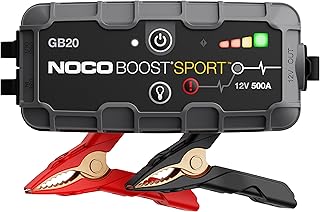 | NOCO Boost GB20 500A UltraSafe Jump Starter, 12V Lithium Battery BoosterNOCO Boost GB20 500A UltraSafe Jump Starter, 12V Lithium Battery Booster | Buyers comparing another solid option | Alternative feature and price balance | View on Amazon |
1) NOCO Boost GB40 12V 1000A UltraSafe Portable Lithium Jump Starter — Most buyers comparing the category
For most 12V vehicles, this is a smart “keep it in the car” starting point. It balances portability with the kind of output most drivers actually need.
Best for: Most buyers comparing the category
Key feature: Balanced overall feature set
Watch for: Confirm your engine size and battery type are within the manufacturer’s recommendations. Also verify what’s included (case, charging cable, clamps) and check storage temperature guidance for your climate.
🧐 Quick verdict: Best overall baseline for most drivers who want a reputable, compact lithium jump starter without overbuying.
| Pros ✅ | Cons ⚠️ |
|---|---|
| ✅ Strong all-around pick for typical 12V jump-start needs | ⚠️ Not the right choice if you regularly jump larger engines that benefit from higher output |
| ✅ Compact “glovebox/trunk” friendly form factor for many vehicles | ⚠️ Like all lithium packs, storage/charging habits affect long-term readiness |
| ✅ Good reference point for comparing bigger or all-in-one alternatives | ⚠️ Verify clamp reach and the physical access you have to your battery terminals |
Why it’s a top pick: For most shoppers, the “best jump starter 2027” isn’t the biggest unit. Instead, it’s the one you’ll keep charged, store easily, and use confidently when it counts. This pick lands in a practical middle ground for everyday drivers.
Decision bullets
- Vehicle check: confirm you’re shopping for a 12V jump starter (most passenger vehicles) and not a different system.
- Power check: match the unit’s intended engine-size guidance to your vehicle, especially if you drive a larger gas engine or diesel.
- Readiness check: verify how you’ll charge and store it (trunk heat/cold, seasonal use, and recharge intervals).
SelectRanker tip: If you’re stuck between two sizes, pick the one you’ll keep in the vehicle year-round and remember to top off.
2) NOCO Boost GB70 2000A UltraSafe Jump Starter, 12V Lithium Battery Booster — Value-focused buyers
Need more headroom than a compact pack? This step-up option makes sense when you’re shopping for a top jump starter for larger engines or tougher conditions.
Best for: Value-focused buyers
Key feature: Strong value for the intended use
Watch for: Higher-output jump packs can be bulkier. Before ordering, confirm storage space, clamp access in your engine bay, and the charging method so it’s realistic to keep it ready.
🧐 Quick verdict: Best pick when your vehicle or conditions call for more jump-starting headroom than the typical compact option.
| Pros ✅ | Cons ⚠️ |
|---|---|
| ✅ Better fit for bigger engines and tougher “dead battery” scenarios | ⚠️ Typically larger and heavier than compact lithium jump starters |
| ✅ Strong alternative when you want extra margin for cold weather or infrequent charging | ⚠️ Extra capability is wasted if you won’t store/maintain it properly |
| ✅ Good choice for drivers who want fewer “will it start?” doubts | ⚠️ Verify included charging accessories and clamp reach for your vehicle layout |
Why it’s a top pick: When engine size is the real constraint (or you routinely help friends and family), a higher-output lithium booster can be the smarter buy than gambling on an undersized pack.
Decision bullets
- Use-case check: larger gas engines, many diesels, and colder climates tend to benefit from more output margin.
- Tradeoff check: confirm you’re okay with the larger footprint versus a smaller “always in the car” unit.
- Compatibility check: verify your battery access (side posts, tight engine bays, trunk-mounted batteries) and clamp reach.
SelectRanker tip: If you’re reading jump starter reviews because your last pack couldn’t start your vehicle, sizing up is often the simplest fix. Just make sure you’ll still keep it charged.
3) GOOLOO A9 Ultra Jump Starter with Air Compressor – 6000A & 160PSI Jump Box — Buyers who want stronger features
Want one device for dead batteries and low tires? This all-in-one style pick is useful for road trips, older vehicles, or keeping one kit in the trunk.
Best for: Buyers who want stronger features
Key feature: Higher-spec or more capable configuration
Watch for: Combo units are convenient, but details matter. Check hose reach, inflation workflow, included adapters, and how the unit is recharged and stored.
🧐 Quick verdict: Best all-in-one option when you want one device to cover both dead-battery starts and routine tire top-offs.
| Pros ✅ | Cons ⚠️ |
|---|---|
| ✅ Combines two common roadside needs in one device | ⚠️ Added features can mean more bulk than a simple jump pack |
| ✅ Convenient for travel kits and shared-family vehicles | ⚠️ Inflator convenience depends on hose length, controls, and storage layout |
| ✅ Strong choice if you value “one grab-and-go box” simplicity | ⚠️ Verify replacement accessories and long-term support for the combo design |
Why it’s a top pick: On a real roadside day, the problem isn’t always just a dead battery. Because of that, a jump starter 2027 shortlist should include at least one option that reduces how many separate tools you need to pack and keep charged.
Decision bullets
- Performance check: make sure the jump-starting capability fits your vehicle, not just the inflator feature.
- Workflow check: confirm the inflator is easy to use quickly (controls, hose reach, storage, and visibility).
- Ownership check: verify how you recharge it and whether you’ll realistically keep it topped off between trips.
SelectRanker tip: If you like the combo idea, prioritize the feature you’ll use most often. Then confirm the other feature won’t be compromised enough to feel frustrating.
4) DEWALT DXAEJ14 1600 Peak Amp Jump Starter with 120 PSI Air Inflator — A more specific use case
Prefer a more traditional jump box form factor for garage use and “always ready” peace of mind? This is the heavier-duty alternative on the list.
Best for: A more specific use case
Key feature: Useful fit for a narrower use case
Watch for: Confirm storage space and charging/storage requirements. Traditional jump box units can be less convenient to carry, and they’re usually happiest when kept maintained and charged.
🧐 Quick verdict: Best pick for buyers who want a bulkier, traditional jump box approach and don’t mind the storage/maintenance tradeoffs.
| Pros ✅ | Cons ⚠️ |
|---|---|
| ✅ Traditional jump-box style that some buyers prefer for garage readiness | ⚠️ Bulkier and less “throw it in any car” portable than compact lithium packs |
| ✅ Useful if you want a combined jump + inflator style tool without relying on a tiny pack | ⚠️ Requires realistic charging/maintenance habits to stay ready |
| ✅ Practical alternative for households that want a dedicated car-maintenance tool | ⚠️ Verify cable/clamp reach and how it stores in your vehicle or garage |
Why it’s a top pick: Not every buyer wants a small lithium pack. If you’d rather keep a dedicated, heavier-duty “car care” unit in the garage (or grab it for multiple vehicles), this style can fit better.
Decision bullets
- Fit check: confirm you have room to store it where you’ll actually keep it (garage shelf, trunk, work truck).
- Maintenance check: verify how it should be kept charged so it’s ready when you need it.
- Use-case check: if you mainly want something for occasional emergencies in one small car, a compact lithium unit may be easier to live with.
SelectRanker tip: The “best” jump starter is the one that’s charged when you need it. Choose a form factor you’ll realistically maintain.
5) NOCO Boost GB20 500A UltraSafe Jump Starter, 12V Lithium Battery Booster — Buyers comparing another solid option
For lighter-duty needs, this is the compact direction. It’s a good fit when you want maximum portability and a simple lithium booster.
Best for: Buyers comparing another solid option
Key feature: Alternative feature and price balance
Watch for: Compact units can be a great value, but only when they’re sized appropriately for your engine. Be realistic about how dead the battery might get and how cold it may be when you need a start.
🧐 Quick verdict: Best compact value pick for smaller engines and buyers who prioritize portability and simplicity.
| Pros ✅ | Cons ⚠️ |
|---|---|
| ✅ Easy to store in smaller vehicles and tight cargo spaces | ⚠️ Less headroom for larger engines or very depleted batteries |
| ✅ Good choice for occasional emergency use when matched to the vehicle | ⚠️ Cold weather and long storage intervals can be harder on smaller packs |
| ✅ Great “second jump starter” for a household with multiple cars | ⚠️ Verify what’s included (case/cables) so you’re not missing essentials |
Why it’s a top pick: For many shoppers, the best value is the unit that’s small enough to live in the car full-time. This pick suits buyers who want a compact booster and understand the limits of smaller-output options.
Decision bullets
- Budget check: make sure “cheaper” doesn’t mean “undersized for your vehicle.”
- Use-case check: ideal for occasional emergencies; frequent jump-starts may point to a larger unit or battery/charging-system diagnosis.
- Risk check: confirm the return window and storage guidance—especially if this will sit unused for long stretches.
SelectRanker tip: If your vehicle is borderline for a compact pack, move up a tier. The worst time to discover you underbought is when you’re stuck.
How we evaluate best jump starter options
The SelectRanker scoring lens
To recommend jump starters that make sense for online buyers, we focus on what changes real use and ownership:
- Use-case match, including vehicle type, engine size, frequency of use, climate, storage location, and whether you need extras like an inflator
- Useful specifications, focusing on the numbers and design choices that affect real starting performance (not just marketing), plus battery capacity and charging practicality
- Compatibility and setup, including clamp/cable reach, battery terminal access, 12V system fit, charging method, and included accessories
- Usability and ownership, including ease of use in the dark, portability, storage case, recharge habits, and whether it’s realistic to keep the unit ready
- Ownership risk, including long-term battery health, replacement/accessory availability, warranty/support, and return terms
Before you buy: best jump starter
Skip or slow down if these apply
Don’t buy this if…
- You haven’t confirmed your vehicle’s needs (12V system, engine size, battery access) and you’re choosing only by a single headline number.
- You need to jump-start larger engines regularly but you’re considering a very compact unit mainly because it’s small or cheap.
- You haven’t checked where you’ll store it and how you’ll keep it charged (especially for extreme heat/cold climates).
- The listing is unclear about what’s included (charging cable, clamps, case) and you don’t want surprises after delivery.
- You’re ignoring recurring ownership realities like recharge intervals, long-term battery health, warranty terms, and return difficulty.
Good signs you are ready to buy
Buy this if…
- You know the vehicle(s) you’re buying for and how “hard” the typical jump-start might be (engine size, cold weather, long sits).
- You understand that “peak amps” and marketing claims aren’t the whole story, and you’re comparing real fit and readiness.
- You’ve checked charging method, storage plan, included accessories, and clamp access for your engine bay.
- You want a clear shortlist of top jump starter options instead of scrolling through endless listings.
Buyer’s guide to best jump starter
Start with the vehicle and the “worst day” scenario
A jump starter that works fine on a warm day for a small engine may struggle after a vehicle sits for weeks in the cold. To choose well, think about the hardest realistic situation: cold weather, older battery, larger engine, or helping multiple vehicles.
Performance and features: compare what actually matters
For a jump starter comparison, focus on real-world fit: intended engine-size guidance, clamp/cable quality, safety protections, and whether you’ll keep it charged. In practice, the biggest number on the page isn’t automatically the best choice.
- Starting capability: match the unit to your engine size and typical conditions (especially cold).
- Battery capacity and readiness: consider how long it may sit unused and how easy it is to top off.
- Usability: simple controls, clear indicators, and practical clamp access matter when you’re stressed on the roadside.
- Extras: inflator, flashlight, and USB power can be useful—if they don’t compromise the core job: starting the car.
Compatibility, size, setup, and ecosystem
Verify the details that can make a great jump starter a bad fit: battery location and access, clamp reach, storage size, charging input type, and whether you need adapters for your preferred charging method.
If two products solve the same need differently, use the related SelectRanker comparison and buying guides supplied with the page to understand the tradeoff before buying.
Build quality, usability, and included accessories
Look beyond the jump rating. Instead, pay attention to clamp quality, cable length, case/storage, and whether the on-device indicators are easy to read. If you plan to use it as a power bank too, check ports and charging practicality.
Maintenance, recurring costs, parts, and ownership
Jump starters are emergency tools, which means they often sit for long periods. Plan for periodic top-offs, safe storage, and avoiding deep discharge. When a unit uses proprietary accessories, verify replacements are easy to get.
Warranty, returns, support, and long-term value
Follow the manufacturer’s instructions for charging, storage, and jump-starting steps. Before you buy, confirm warranty coverage and return terms—especially for higher-cost units or combo jump starter/inflator designs.
Decision table: buyer concern → what it means → what to check
| Concern | Likely cause | What to check before buying |
|---|---|---|
| The jump starter can’t start my vehicle | Unit is undersized for engine size, conditions, or battery state | Match intended engine-size guidance; understand “peak” marketing; use Jump Starter Peak Amps Explained |
| It doesn’t physically work well in my car | Battery access is tight; clamps/cables are awkward; storage is too bulky | Check clamp reach, cable length, battery location (trunk/under-seat), and where you’ll store it |
| It’s dead when I finally need it | Long storage without top-offs; poor storage temperature; deep discharge | Verify recommended recharge interval and storage guidance; choose a size you’ll maintain |
| Inflator feature is frustrating | Hose reach, controls, or workflow doesn’t match your needs | Check hose length, PSI workflow, included adapters, and how it stores after use |
| Ownership becomes annoying | Missing accessories; awkward charging; unclear indicators | Confirm included cables/case, charging input type, and indicator clarity |
| Results are inconsistent | Technique/setup issues or marginal sizing for the vehicle | Review correct connection steps and consider sizing up for more margin |
| The feature list feels confusing | Marketing terms aren’t comparable across brands | Return to basics: vehicle fit, readiness, clamp access, storage, and warranty/support |
Use the related SelectRanker guides below for deeper category-specific sizing, fit, compatibility, setup, maintenance, and ownership questions.
Common mistakes and quick wins
Quick wins for choosing the best jump starter
- Match the unit to the vehicle, not the hype. Engine size, climate, and how dead the battery may be matter more than a flashy spec.
- Plan storage and charging. A jump starter is only helpful if it’s charged and easy to reach.
- Check the negative reviews for patterns. Look for repeated issues: clamp reach, battery not holding charge, confusing indicators, or return/warranty hassles.
- Keep it simple if you won’t use extras. Combo inflator models are great if you’ll use them—otherwise a simpler pack can be easier to maintain.
Common mistakes
- Buying the smallest/cheapest unit without checking engine-size guidance.
- Assuming “peak amps” alone predicts real starting success.
- Ignoring battery access and clamp/cable reach in tight engine bays.
- Storing it for months without a top-off, then expecting it to work perfectly.
- Choosing a bulky jump box for “more power,” then never keeping it in the vehicle because it’s inconvenient.
For deeper context, continue with the related SelectRanker guides covering sizing, specifications, compatibility, setup, maintenance, and closely related product comparisons for this topic.
Related SelectRanker guides
- Explore the broader SelectRanker category guide for this product type: Car Power Maintenance hub
- Explore more automotive buying guides: Automotive hub
- Browse all SelectRanker “Best” rankings: Best Products hub
- Understand jump starter sizing terms: Jump Starter Peak Amps Explained
FAQs
1) What matters most when choosing the best jump starter?
Start with vehicle match (12V system and engine-size guidance). Next, prioritize real usability: clamp access and reach, how you’ll keep it charged, and whether it’s small enough to stay in the vehicle. After that, weigh extras like an inflator or USB power.
2) How do I pick the right jump starter size for my engine?
Choose a unit that fits your engine size and your “worst day” scenario (cold weather, older battery, long sits). Undersizing can fail when you need it most, while oversizing can be so bulky you stop carrying it or maintaining it.
3) Are “peak amps” the main spec that matters for a jump starter?
No. Peak numbers can help you compare within a brand lineup, but real success also depends on battery condition, temperature, clamp connection quality, and whether the unit is charged. For terminology help, use: Jump Starter Peak Amps Explained.
4) What fit checks should I do before ordering a jump starter?
First, confirm you need a 12V jump starter. Then check where your battery terminals are located (and how tight access is) and verify clamp/cable reach. Finally, confirm the charging input type and what accessories are included so you can keep it ready.
5) Is a jump starter with an air compressor a good idea?
It can be a great choice for road trips, older vehicles, or anyone who regularly tops off tires. However, combo units are usually bulkier and give you more to maintain, so they’re worth it only if you’ll actually use the inflator.
6) Should I buy a lithium jump starter or a traditional jump box?
Lithium packs are typically smaller and easier to keep in the car. Traditional jump boxes can be appealing for garage use and a more “tool-like” setup, but they’re bulkier and still require maintenance charging. Choose the style you’ll keep ready.
7) How often should I recharge my jump starter?
Follow the manufacturer’s guidance for your exact model. To stay prepared, don’t treat it like a “charge once and forget it” tool—check the charge periodically, especially after using it or after long storage.
8) What should I double-check right before checkout?
Verify vehicle fit (12V and engine-size guidance), clamp/cable reach, charging method, included accessories, storage plan, warranty/returns, and repeated complaints in reviews about battery holding charge or confusing operation.
Final verdict on best jump starter
If you want the safest first choice, start with Pick #1 because it gives you the cleanest baseline for use-case fit, useful features, compatibility, setup, and ownership risk.
Choose Pick #2 when its focused advantage solves your main constraint better than the overall pick (especially larger engines).
Choose Pick #3 when an all-in-one jump starter + inflator matches how you travel and maintain your vehicle.
Choose Pick #4 when you prefer a traditional, heavier-duty jump box style and can accommodate the size and maintenance needs.
Choose Pick #5 when compact storage and budget value matter most—and your vehicle’s needs fit a smaller unit.
For more context, continue with the related SelectRanker category hub and guides listed above.