Best Vacuum Sealers 2027: Top 5 Picks Compared
Finding the best vacuum sealer can get confusing fast because different machines shine in different situations: freezer meal prep, sous vide, bulk buying, hunting/fishing portions, or quick weeknight leftovers. The right pick depends on your sealing workflow, how “wet” your foods are, bag/roll compatibility, counter space, and which convenience features you’ll actually use.
This SelectRanker guide keeps it practical with a vacuum sealer comparison focused on fit checks, everyday usability, and ownership details—so you can choose confidently without paying for features you won’t use.
If you’re also sorting through vacuum sealer reviews, treat this page as a shortlist. It explains who each pick is for, what to verify before ordering, and which tradeoffs matter in day-to-day kitchen use.
Top 3 Vacuum Sealers
Compare the first three reviewed products at a glance.
Disclosure: As an Amazon Associate, SelectRanker may earn from qualifying purchases. We may also earn from other affiliate links. This does not change what we recommend or how we compare products.
#1

Updated Vacuum Sealer Machine 2025, MEGAWISE Food Sealer w/Starter Kit, Dry & Moist Food Modes, Compact Design with 10 Vacuum Bags & Built-in Cutter (Grey)
Editor's Pick
Our top-three picks Rating
Best for
Most households that want one reliable, straightforward sealer for dry and moist foods
Key feature
Dry & moist modes plus an included cutter for quick bag sizing
#2

POTANE Precision Vacuum Sealer Machine, Powerful Pro Vacuum Food Sealer, 8-in-1 Easy Presets, 4 Food Modes, Dry&Moist&Soft&Delicate with Starter Kit, Compact Design(Silver)
Strong Choice
Our top-three picks Rating
Best for
Best value for frequent sealing with more presets for different foods
Key feature
8-in-1 presets with multiple food modes for better control on delicate items
#3

FoodSaver FM2100 Vacuum Sealer Machine, One-Touch Sealing, Roll Storage & Cutter, Dry & Moist Food, For Sous Vide Cooking, Accessory Port & Hose, Starter Bags & Roll Included
Featured Pick
Our top-three picks Rating
Best for
Sous vide and batch prep buyers who want roll storage + accessory support
Key feature
Built-in roll storage/cutter and an accessory port for containers/canisters
This page compares 5 product options, focused on real buying decisions:
- Use-case and fit, including who the product is for, where it will be used, size or fit, portability where relevant, and expected frequency of use
- Performance and compatibility, including the category-specific specifications, dimensions, capacity, connectivity or power needs, included accessories, and setup that affect real use
- Ownership risk, including maintenance, recurring costs, replacement parts, subscriptions where relevant, warranty/support, returns, and long-term value
SelectRanker connects each comparison to the most relevant category hub, related product comparisons, and practical buying guides so you can check the wider context before ordering.
Best Vacuum Sealers 2027: Top 5 Picks Compared
| Image | Product | Best for | Key feature | View on Amazon |
|---|---|---|---|---|
| Updated Vacuum Sealer Machine 2025, MEGAWISE Food Sealer w/Starter Kit, Dry & Moist Food Modes, Compact Design with 10 Vacuum Bags & Built-in Cutter (Grey)Updated Vacuum Sealer Machine 2025, MEGAWISE Food Sealer w/Starter Kit, Dry & Moist Food Modes, Compact Design with 10 Vacuum Bags & Built-in Cutter (Grey) | Most households that want one reliable, straightforward sealer for dry and moist foods | Dry & moist modes plus an included cutter for quick bag sizing | View on Amazon |
| POTANE Precision Vacuum Sealer Machine, Powerful Pro Vacuum Food Sealer, 8-in-1 Easy Presets, 4 Food Modes, Dry&Moist&Soft&Delicate with Starter Kit, Compact Design(Silver)POTANE Precision Vacuum Sealer Machine, Powerful Pro Vacuum Food Sealer, 8-in-1 Easy Presets, 4 Food Modes, Dry&Moist&Soft&Delicate with Starter Kit, Compact Design(Silver) | Best value for frequent sealing with more presets for different foods | 8-in-1 presets with multiple food modes for better control on delicate items | View on Amazon |
| FoodSaver FM2100 Vacuum Sealer Machine, One-Touch Sealing, Roll Storage & Cutter, Dry & Moist Food, For Sous Vide Cooking, Accessory Port & Hose, Starter Bags & Roll IncludedFoodSaver FM2100 Vacuum Sealer Machine, One-Touch Sealing, Roll Storage & Cutter, Dry & Moist Food, For Sous Vide Cooking, Accessory Port & Hose, Starter Bags & Roll Included | Sous vide and batch prep buyers who want roll storage + accessory support | Built-in roll storage/cutter and an accessory port for containers/canisters | View on Amazon |
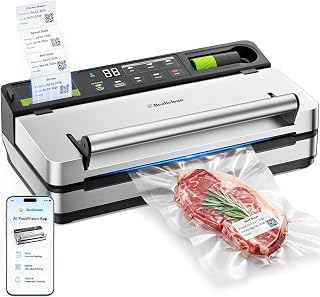 | 98kPa Smart Vacuum Sealer with FreshTrack Label Printing & Food Manager App98kPa Smart Vacuum Sealer with FreshTrack Label Printing & Food Manager App | High-volume organizers who want labeling + tracking for freezer inventory | FreshTrack label printing with app-based food management workflow | View on Amazon |
 | Nesco Deluxe Food VS-12 Vacuum Sealer, 130 Watts, Kit Bags & Viewing Lid, Compact, SilverNesco Deluxe Food VS-12 Vacuum Sealer, 130 Watts, Kit Bags & Viewing Lid, Compact, Silver | Buyers who want a proven alternative with adjustable sealing control | Control options that help you tune sealing for different foods and bag types | View on Amazon |
1) Updated Vacuum Sealer Machine 2025, MEGAWISE Food Sealer w/Starter Kit, Dry & Moist Food Modes, Compact Design with 10 Vacuum Bags & Built-in Cutter (Grey) — Most households that want one reliable, straightforward sealer for dry and moist foods
If you want one machine that covers common home-kitchen jobs—portioning bulk buys, freezing proteins, packing leftovers, and prepping for sous vide—this is a strong baseline pick for your shortlist.
Best for: Most households that want one reliable, straightforward sealer for dry and moist foods
Key feature: Dry & moist modes plus an included cutter for quick bag sizing
Watch for: Confirm which bag types and sizes it supports, whether you’ll use pre-cut bags or rolls, and how it handles wetter foods (marinated meats, juicy fruit, soups) without pulling liquid into the vacuum channel.
🧐 Quick verdict: Best overall starting point for a typical home workflow—simple, versatile, and easy to compare against more specialized sealers.
| Pros ✅ | Cons ⚠️ |
|---|---|
| ✅ Straightforward feature set for everyday sealing (dry vs. moist) | ⚠️ Wet foods still require technique (pre-freeze, paper towel, or careful mode choice) |
| ✅ Built-in cutter is convenient if you plan to use bag rolls | ⚠️ Not every “starter kit” matches the bag sizes you’ll actually use long-term |
| ✅ Good baseline pick for comparing “top vacuum sealer” claims | ⚠️ Verify replacement bag/roll compatibility and availability before committing |
Why it’s a top pick: For most buyers, “best vacuum sealer 2027” doesn’t mean the most expensive machine. Instead, it means the one you’ll use often because setup is easy, seals are consistent, and compatible bags/rolls are simple to find.
Decision bullets
- Use-case check: list what you seal most (proteins, veggies, meal prep, dry pantry items, sous vide) and how often you’ll run batches.
- Bag check: decide if you prefer pre-cut bags or rolls; the “best vacuum sealer” for you is the one that matches your bag habit.
- Wet-food check: if you seal marinades or juicy items, plan on pre-freezing or choosing settings that reduce liquid pull-through.
SelectRanker tip: If you’re new to vacuum sealing, start here. Then put any “upgrade budget” into better bags/rolls and a workflow you’ll stick with.
2) POTANE Precision Vacuum Sealer Machine, Powerful Pro Vacuum Food Sealer, 8-in-1 Easy Presets, 4 Food Modes, Dry&Moist&Soft&Delicate with Starter Kit, Compact Design(Silver) — Best value for frequent sealing with more presets for different foods
This pick is the value play when you want more control than a basic sealer. It’s especially helpful if you seal a mix of fragile foods (bread, pastries) and sturdier items (meat portions, frozen packs) and want to avoid crushing delicate ingredients.
Best for: Best value for frequent sealing with more presets for different foods
Key feature: 8-in-1 presets with multiple food modes for better control on delicate items
Watch for: Presets only help if they match your foods and bags. Before buying, check how you switch modes (dry/moist/soft/delicate) and whether the controls feel intuitive for quick, repeated batches.
🧐 Quick verdict: Best value when you seal often and want more “food-specific” control without jumping to a specialty system.
| Pros ✅ | Cons ⚠️ |
|---|---|
| ✅ Better fit for mixed foods (delicate + hearty) thanks to multiple modes | ⚠️ More modes can mean more learning curve vs. a simple one-button unit |
| ✅ Strong value if you batch-seal regularly and want repeatable workflow | ⚠️ Still depends on using compatible bags and correct loading technique |
| ✅ Good alternative to Pick #1 if you prioritize presets and control | ⚠️ Confirm what’s included in the starter kit so you can budget for refills |
Why it’s a top pick: Value isn’t just about spending less. In practice, it’s about getting a machine that fits your routine and helps you avoid wasted bags, crushed food, and redo attempts.
Decision bullets
- Use-case check: if you frequently seal delicate items, prioritize modes designed to reduce crushing.
- Tradeoff check: make sure you’re comfortable using presets (and that other household members can use it easily too).
- Compatibility check: verify bag/roll sizes and whether you’ll need special bags for best results.
SelectRanker tip: Pick #2 makes sense when you seal often and want fewer trial-and-error seals across different foods.
3) FoodSaver FM2100 Vacuum Sealer Machine, One-Touch Sealing, Roll Storage & Cutter, Dry & Moist Food, For Sous Vide Cooking, Accessory Port & Hose, Starter Bags & Roll Included — Sous vide and batch prep buyers who want roll storage + accessory support
This is the pick for a more “system” style workflow—especially if you like using rolls for custom bag lengths and you want the option to vacuum-seal containers/canisters via an accessory port.
Best for: Sous vide and batch prep buyers who want roll storage + accessory support
Key feature: Built-in roll storage/cutter and an accessory port for containers/canisters
Watch for: Accessory use may require compatible hoses/containers (often sold separately). Also check the machine footprint if you plan to store it on the counter full-time.
🧐 Quick verdict: Best for a “meal prep + sous vide” routine where roll storage and accessory sealing are genuinely useful.
| Pros ✅ | Cons ⚠️ |
|---|---|
| ✅ Roll storage + cutter supports fast, repeatable batch prep | ⚠️ Accessory features can add cost if you need extra containers or hoses |
| ✅ Good fit for sous vide bag making (custom lengths, consistent seals) | ⚠️ Not everyone needs counter-space for an “always out” sealer |
| ✅ Helps streamline a full vacuum-sealing workflow vs. basic sealers | ⚠️ Verify bag compatibility and sealing width for the rolls you plan to buy |
Why it’s a top pick: If your “vacuum sealer 2027” goal is a repeatable routine (buy in bulk → portion → label → freeze → sous vide), workflow features can matter more than marketing claims. Roll handling and accessory support are the main reasons to choose this style.
Decision bullets
- Performance check: confirm it has the modes you’ll actually use (dry/moist) and that sealing feels consistent for your typical foods.
- Compatibility check: if you want container sealing, verify which accessories are required and whether they’re easy to source.
- Workflow check: roll storage is valuable if you regularly make custom-length bags (steaks, racks, meal kits), not just small snack packs.
SelectRanker tip: If you won’t use rolls or accessories, a simpler machine can deliver similar results with less footprint.
4) 98kPa Smart Vacuum Sealer with FreshTrack Label Printing & Food Manager App — High-volume organizers who want labeling + tracking for freezer inventory
This is the specialized pick for people who seal a lot and want to stay organized. It’s built for freezer inventory, rotating stock, and reducing “mystery bags” that end up wasted.
Best for: High-volume organizers who want labeling + tracking for freezer inventory
Key feature: FreshTrack label printing with app-based food management workflow
Watch for: Confirm the app features fit your routine (and that your household will actually use them). Also check ongoing label or consumable needs so the “smart” features don’t become a recurring hassle.
🧐 Quick verdict: Best when organization is the real problem you’re solving—not just sealing.
| Pros ✅ | Cons ⚠️ |
|---|---|
| ✅ Labeling + tracking can reduce waste for big freezer/prep households | ⚠️ Smart features add complexity; they’re not necessary for everyone |
| ✅ Great fit for batch sealing where dating/rotation matters | ⚠️ Check consumables for labels and how replacements are sourced |
| ✅ Useful for households that treat vacuum sealing like inventory management | ⚠️ App reliance means you should verify setup, permissions, and long-term usability |
Why it’s a top pick: For some buyers, sealing isn’t the hard part. The real challenge is remembering what’s in the freezer and when it went in, and this option is built around that workflow.
Decision bullets
- Fit check: make sure you actually want labels on bags (and have a storage system that benefits from it).
- Ownership check: verify consumables (labels) and whether the app workflow is optional or central to core use.
- Household check: smart organization features only pay off if everyone follows the system.
SelectRanker tip: If a marker-and-date system already works for you, skip “smart” features you won’t maintain.
5) Nesco Deluxe Food VS-12 Vacuum Sealer, 130 Watts, Kit Bags & Viewing Lid, Compact, Silver — Buyers who want a proven alternative with adjustable sealing control
This is a solid alternative when you want a more tunable sealing experience. It’s a good fit if you’re picky about getting clean seals across different bag thicknesses and food types.
Best for: Buyers who want a proven alternative with adjustable sealing control
Key feature: Control options that help you tune sealing for different foods and bag types
Watch for: Confirm how you’ll source compatible bags/rolls long-term and whether the controls match your comfort level (simple “set and forget” vs. more hands-on tuning).
🧐 Quick verdict: Best alternative pick if you want more control than a basic unit, without paying for app-based extras.
| Pros ✅ | Cons ⚠️ |
|---|---|
| ✅ Good all-around alternative for buyers who like adjustable control | ⚠️ More control can mean more trial-and-error at first |
| ✅ Useful for mixed sealing jobs (freezer, pantry, meal prep) | ⚠️ Verify bag/roll compatibility so you’re not locked into pricey refills |
| ✅ Strong shortlist candidate if Pick #1 or #2 isn’t the right fit | ⚠️ Make sure the footprint and storage plan fits your kitchen |
Why it’s a top pick: A good value vacuum sealer isn’t always the cheapest. This alternative earns a spot by balancing everyday sealing with controls that can help when you switch between different foods and bag types.
Decision bullets
- Budget check: factor ongoing bag/roll costs—consumables are often the real long-term expense.
- Use-case check: if you mainly seal dry pantry items, you may not need extra control features.
- Risk check: confirm warranty/returns and look for repeated buyer notes about sealing consistency and bag feeding.
SelectRanker tip: For long-term value, prioritize easy-to-find compatible bags and a workflow you’ll use weekly—not just once a month.
How we evaluate best vacuum sealer options
The SelectRanker scoring lens
To recommend vacuum sealers that make sense for online buyers, we focus on what changes real use and ownership:
- Use-case match, including who the product is for, frequency of use, kitchen workflow, counter/storage space, and the types of foods being sealed (dry, moist, delicate, marinated)
- Useful specifications, focusing on sealing modes, control options, bag/roll handling, and any features that change repeatability (like built-in cutters or roll storage)
- Compatibility and setup, including bag/roll sizes, accessory ports (if applicable), included starter bags/rolls, cleanup needs, and how quickly you can run batches
- Usability and ownership, including controls, learning curve, noise, storage, cleanup of drip trays or channels, and whether the workflow encourages regular use
- Ownership risk, including consumable costs (bags/rolls/labels), replacement part availability, warranty/support, return difficulty, and long-term value
Before you buy: best vacuum sealer
Skip or slow down if these apply
Don’t buy this if…
- You haven’t decided what you’ll seal most (dry pantry, freezer proteins, meal prep, sous vide, delicate foods, marinated/wet items).
- You’re assuming any bag will work with any machine without checking bag/roll compatibility.
- You don’t have a plan for wet foods (pre-freezing, careful mode choice, or using a technique that reduces liquid pull-through).
- The listing doesn’t clearly show what’s included (starter bags/rolls, cutter, hose/accessory parts, labels) and what you’ll need to buy separately.
- You haven’t checked the footprint and storage plan—many sealers get used less when they’re annoying to take out and put away.
Good signs you are ready to buy
Buy this if…
- You know your main sealing jobs and how often you’ll seal in batches.
- You’ve decided whether you prefer pre-cut bags or rolls, and you’ve checked what the machine supports.
- Before clicking buy, you’ve checked fit, setup, cleanup, consumables, replacement availability, warranty/support, and returns.
- You want a clear shortlist of proven options instead of endlessly comparing “vacuum sealer 2027” listings.
Buyer’s guide to best vacuum sealer
Start with the buyer and real use case
The “best vacuum sealer” for bulk meat portions may not be the best choice for delicate baked goods or for someone who only seals leftovers once a week. First, list what you seal, how wet it is, and whether you’re sealing single meals or large batches.
Performance and features: compare what actually matters
With vacuum sealers, real-world results come from the right modes and a repeatable workflow—not from a long feature list. To narrow your options, compare features that change outcomes for your foods and habits.
- Sealing modes: dry vs. moist is the baseline; delicate/soft modes matter if you seal crushable foods.
- Bag workflow: rolls + cutter are great for custom lengths; pre-cut bags are simpler and faster.
- Wet-food strategy: plan for pre-freezing or careful technique so liquids don’t interfere with seals.
- Batch convenience: features like roll storage, easy controls, and quick cleanup can matter more than minor performance differences.
Compatibility, size, setup, and ecosystem
Before ordering, confirm bag/roll compatibility, intended bag widths, and whether you need accessories (like container hoses) for your workflow. If you’re unsure, use: Vacuum Sealer Bag Compatibility Guide
If two products solve the same need differently, use the related SelectRanker comparison and buying guides supplied with the page to understand the tradeoff before buying.
Build quality, usability, and included accessories
A vacuum sealer should be easy to operate repeatedly without fuss. Look for clear controls, a bag path that’s easy to align, and included items that match your plan (bags/rolls, cutter, hoses, labels). Also scan reviews for repeated notes about sealing consistency and cleanup after moist foods.
Maintenance, recurring costs, parts, and ownership
Ownership cost is mostly about consumables: bags, rolls, and (for smart/label systems) labels. To avoid surprises, estimate what you’ll use over a few months and confirm you can easily find compatible refills.
Warranty, returns, support, and long-term value
Vacuum sealers are small appliances with heating elements and moving parts, so returns and warranty terms matter. Check the seller’s return window, the manufacturer’s warranty coverage, and any exclusions—then follow the official instructions for bag type, loading, and duty cycle.
Decision table: buyer concern → what it means → what to check
| Concern | Likely cause | What to check before buying |
|---|---|---|
| The seal fails or leaks in the freezer | Wrong bag type, moisture in the seal area, or poor bag alignment | Bag compatibility, moist/dry mode options, technique for wet foods, and how easy it is to position bags consistently |
| The machine pulls liquid into the vacuum channel | Sealing very wet foods without a strategy | Moist mode, pulse/soft options (if available), drip tray/channel design, and whether you can pre-freeze liquids first |
| The product doesn’t fit your kitchen routine | Too bulky to store, annoying to set up, or slow for batches | Footprint, storage plan, roll storage/cutter convenience, and cleanup steps after sealing |
| You keep wasting bags | Trial-and-error settings or inconsistent sealing technique | Control options (dry/moist/soft), clear instructions, and whether starter supplies match your bag plan (rolls vs pre-cut) |
| Ownership becomes expensive | High bag/roll/label costs or hard-to-find refills | Compatible bag/roll availability, bulk refill options, and any proprietary consumables (including labels for smart models) |
| Delicate foods get crushed | Too much vacuum for fragile items | Soft/delicate modes, pulse/manual control options, and whether the workflow allows you to stop vacuuming before sealing |
| The feature list feels confusing | Different brands use different terms for similar functions | Return to the basics: your foods, your bag workflow, counter/storage space, consumables, and warranty/returns |
Use the related SelectRanker guides below for deeper category-specific sizing, fit, compatibility, setup, maintenance, and ownership questions.
Common mistakes and quick wins
Quick wins before you buy
- Decide “rolls vs. bags” first. It affects convenience, cost, storage, and whether a built-in cutter matters.
- Plan for wet foods. Pre-freeze liquids/sauces, keep the seal area dry, and use moist/soft settings when available.
- Check consumables early. The best deal on a sealer can become expensive if compatible bags/rolls are hard to find.
- Read the 1–3 star reviews for patterns. Look for repeated issues with sealing consistency, bag feeding, cleanup after moist foods, or customer support.
Common mistakes
- Buying a “top vacuum sealer” based on a single headline claim without checking bag compatibility and wet-food handling.
- Assuming all bags are interchangeable across brands and models.
- Choosing a bulky unit with no storage plan, then rarely using it.
- Trying to seal soups/marinades without pre-freezing or a strategy to keep liquid out of the seal area.
- Ignoring long-term bag/roll costs and availability.
For deeper context, continue with the related SelectRanker guides covering sizing, specifications, compatibility, setup, maintenance, and closely related product comparisons for this topic.
Related SelectRanker guides
- Explore the broader SelectRanker category guide for this product type: Best Products hub
- Browse kitchen picks and comparisons: Kitchen hub
- More food prep guides and tools: Food Prep hub
- Bag compatibility and what to buy for your machine: Vacuum Sealer Bag Compatibility Guide
FAQs
1) What should buyers prioritize when choosing the best vacuum sealer?
Start with your sealing workflow: what foods you seal (dry vs moist vs delicate), whether you prefer rolls or pre-cut bags, and how often you run batches. Next, compare bag compatibility, how easy it is to get consistent seals, cleanup (especially after moist foods), and the long-term cost and availability of bags, rolls, or labels.
2) Are vacuum sealer rolls better than pre-cut bags for most kitchens?
Rolls are a better fit if you want custom lengths and you’ll use a built-in cutter regularly. Pre-cut bags are usually better if you want speed and simplicity with less setup. For most buyers, the best vacuum sealer is the one that matches the consumable style you’ll keep stocked.
3) What usually causes vacuum sealer bags to lose their seal?
Failed seals usually come from moisture or food particles in the seal area, misaligned bag placement, or bags that don’t match the machine’s requirements. With wet foods, pre-freezing and keeping the seal edge clean often helps more than upgrading to a pricier sealer.
4) Do I need both moist and dry modes on a vacuum sealer?
If you seal anything beyond dry pantry items, yes—moist vs dry modes are among the most practical features for real kitchens. Moist mode can help when sealing juicy meats, marinated foods, or items that can interfere with sealing. If you only seal dry snacks or dehydrated foods, a simpler machine may be enough.
5) Are smart vacuum sealers worth it for freezer organization?
They can be worth it when organization is the main problem you’re solving, such as managing a large freezer, rotating inventory, or tracking dates to reduce waste. However, if you won’t use the app/label workflow consistently, a simpler sealer plus a marker and a solid bag system is often the better value.
6) Can I use any brand of vacuum sealer bags with any machine?
Not always. Many machines work with common textured/embossed bag styles, but widths, thickness, and channel patterns can affect results. Before you commit, verify bag/roll compatibility and availability for your model. Use: Vacuum Sealer Bag Compatibility Guide
7) What should I look for if I seal a lot of meat for the freezer?
Look for a machine that’s easy to run in batches, supports the bag widths you want, and keeps the workflow consistent (clear controls, easy bag alignment, and straightforward cleanup). Also plan for bags/rolls, because high-volume freezer sealing is often limited more by consumable cost than by the sealer itself.
8) What should I check before ordering a vacuum sealer online?
Confirm the exact model, bag/roll compatibility, included starter supplies, footprint for your counter/storage, how it handles moist foods (modes/controls), and the return/warranty terms. After that, scan reviews for repeated complaints about seal failures, bag feeding, or support problems.
Final verdict on best vacuum sealer
If you want the safest first choice, start with Pick #1 because it gives you a clean baseline for use-case fit, useful features, compatibility, setup, and ownership risk.
Choose Pick #2 when its focused advantage (more presets and food modes) matches your day-to-day sealing mix better than the overall pick.
Pick #3 is the better fit when roll storage and accessory sealing support your meal prep or sous vide workflow.
Go with Pick #4 when labeling and inventory tracking is the real upgrade you need for a high-volume freezer routine.
Choose Pick #5 when you want a strong alternative with practical control and a long-term value focus.
For more context, continue with the related SelectRanker category hub and guides listed above.